
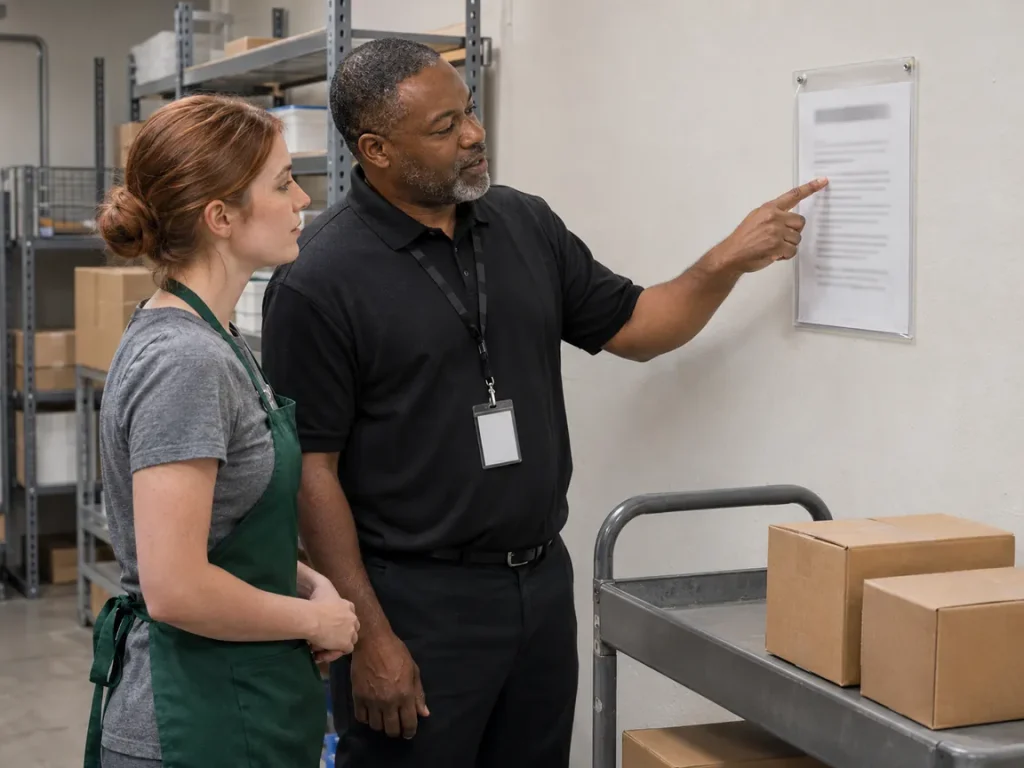
A retail SOP (standard operating procedure) is a one-page written procedure for a task a store repeats: who does it, when, in which steps, to what standard and with what proof. Writing one is the easy part. The hard part is that store 14 still follows the version from two years ago, store 22 never opened it, and nobody at head office can tell which is which.
This guide covers what goes on the page, with a worked example for receiving a delivery, and what happens after: testing the procedure, rolling it out, checking that stores follow it and keeping it current. It is written for operations, area and store managers who need every store to do a task the same way.
SOP, policy, checklist, quiz: one task at four levels
People use these words loosely, which is how a chain ends up with a binder nobody opens. They are four documents with four jobs. Here is one task, receiving a delivery, at each level.
The checklist is what people use every day, so it gets mistaken for the SOP. The US EPA’s guidance on preparing SOPs was written for environmental quality systems, but its basics hold in a stockroom too, and it puts the difference in one line: “the checklist is not the SOP, but a part of the SOP.” The SOP holds the standard and the exceptions. The checklist makes sure the steps happen.
A checklist with no SOP behind it lists the steps but never says why they matter or what to do when one fails. An SOP with no checklist is a document people read once at training.
Retail SOP examples: which to write first
A store repeats hundreds of small routines, and you do not need an SOP for each one. Ask three questions of every task. How often is it done? What does a mistake cost in money, safety or customer trust? How much do stores differ today? The EPA guidance names similar factors for deciding how much detail an SOP needs: whether the process is critical, how often it is done and how many people will use it. A task that is done daily, is expensive when wrong and is done differently in every store goes first.
These eight are usually near the top of the list in a retail chain. Each row links to the guide on this blog to start from.
| SOP | Why it comes early | Start from |
|---|---|---|
| Open and close the store | Runs every day, and a missed step shows up as lost sales or a security gap | Opening and closing checklist |
| Receive a delivery | A miscount at the door becomes a shortage nobody can claim | Goods receiving checklist |
| Handle damaged goods | Without a rule, damage gets hidden or thrown away | Damaged goods procedure |
| Hand over between shifts | What the morning shift knew is lost when the evening shift starts | Shift handover checklist |
| Count stock | Records drift quietly until the year-end count exposes them | Cycle count process |
| Transfer stock between stores | Goods leave one store and must be accounted for at the other | Stock transfer process |
| Return goods to a vendor | Credits depend on paperwork done on time | Return to vendor process |
| Report an incident | Safety and security events need the same record every time | Incident report template |
Start with three to five, not fifty. Together they become your store operations manual, also called a retail operations manual, but build it one SOP at a time instead of writing the whole manual before anyone has used a page of it. A current SOP that stores use is worth more than forty that nobody maintains.
What goes into a retail store SOP
Keep it to one page for the associate. If the task needs more, split it into two SOPs or move the detail into an attachment, such as a photo of the correct display. Every SOP uses the same ten parts in the same order, so a manager who has read one knows where to look in all of them.
Title. The task as a verb phrase, specific enough to tell it from its neighbors: “Receive a delivery at the stockroom door,” not “Receiving.”
Purpose. One sentence on why the task matters, so staff can make a sensible call when something unexpected happens.
Scope. Which stores, shifts and situations it covers, and where another SOP takes over.
Owner. One named role that answers for the SOP. “Store staff” is not an owner.
Trigger. What starts the task: a time (“before opening”), an event (“a delivery arrives”) or a result (“an audit check fails”).
Steps. Numbered, in the order the work happens, one action per step, each starting with a verb.
Standard. What done right looks like, in numbers and photos instead of adjectives: “the count matches the slip,” “facings in a straight line at the shelf edge.”
Exceptions. What to do when the normal path breaks, and who to call.
Proof. The evidence the task leaves behind: a count, a photo, a signature, a note.
Review date. When the page was last confirmed and when it is due again.
Copy these ten parts into a blank document and you have a retail SOP template that fits on one page. Write the steps the way you would tell a new colleague, not the way a policy reads. The EPA guidance asks for a “concise, step-by-step, easy-to-read format” in the active voice. “Check the delivery” is a wish. “Count the cartons against the packing slip before the driver leaves” is a step: one action, a verb, something you can see was done.
A worked example: receive a delivery
Here is the format filled in for one task. It is an illustration, not a standard to copy: change the roles and the details to match your stores.
| Part | What the page says |
|---|---|
| Title | Receive a delivery at the stockroom door |
| Purpose | Catch shortages and damage while the driver is still there, so the claim is easy to make |
| Scope | Supplier and carrier deliveries at the stockroom door, in every store; transfers between stores have their own SOP |
| Owner | Store manager; the assistant manager when the manager is off |
| Trigger | A supplier or carrier delivery arrives |
| Standard | The count matches the slip, or the difference is written on the driver’s copy before the driver leaves |
| Proof | The count entered on the phone, a photo of the signed slip and photos of any damage |
| Review date | One year after approval, and after any change of supplier or carrier |
The steps:
Meet the driver at the receiving door and check the paperwork against the delivery: store name, supplier and number of cartons.
Check the seal and the outside of every carton before you sign.
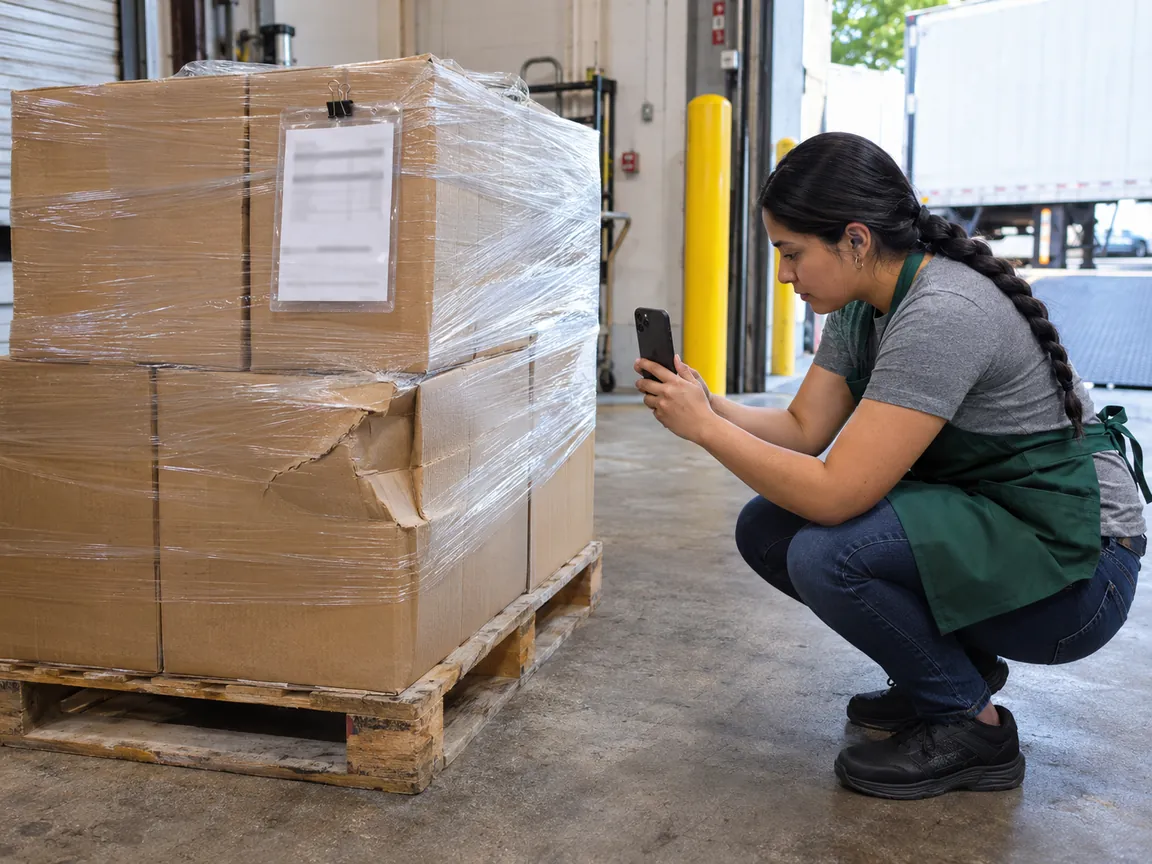
Photograph any crushed, wet or open carton where it stands.
Count the cartons against the packing slip and enter the count on your phone.
Write any difference on the driver’s copy before the driver leaves.
Photograph the signed slip.
Report any shortage or damage to the supplier the same day, with the photos attached.
Put the goods away, chilled and frozen first, and close the delivery.
Exceptions: if the driver cannot wait, write “not counted” next to your signature, count the goods straight away and report any difference to the supplier the same day. If more than one carton is damaged, call the store manager before anything goes to the shelf, because the manager decides whether to refuse the delivery.
Test it before every store gets it
A procedure that reads well to its writer fails on the floor in predictable ways. Three steps catch many of them before the page reaches every store.
Hand it to someone who did not write it
The EPA guidance calls it “especially helpful” when draft SOPs are “tested by individuals other than the original writer.” In a store, give the page to an associate who has never done the task, say nothing and watch. Mark every place where they hesitate, ask a question or do something different from the page. Each mark is a sentence to fix.

Pilot in three different stores
Run it for two to four weeks in three stores that differ: a large one, a small one and one with a weak record on this task. Ask the people who do the work what the page missed. The EPA guidance wants SOPs written by “subject-matter experts who actually perform the work,” and says a team approach promotes “buy-in” from the people who will use them.
Train on the floor, not in a meeting
Do not hold a call and forward a PDF. Show the task once at the place where it happens, put the checklist in people’s hands and follow up with two or three quiz questions over the next few days. New hires get the same treatment in their first week, as in our retail onboarding checklist.
Check that stores follow it
The EPA guidance is blunt: “the best written SOPs will fail if they are not followed,” so management has to review and reinforce their use. It also asks for current copies to be “readily accessible for reference in the work areas” of the people doing the task, on paper or on a screen. Three sources show you what stores actually do, and each covers a different gap.
Proof inside the task
For routine SOPs, build the proof into the checklist: a count typed in, a photo taken, a note when something is off. The store manager or a reviewer sees it the same day, and head office sees which stores did it and which did not.
An audit line for the SOPs that matter most
Where a miss costs the most, add one line to the store audit that checks the result, not the document: “Delivery slip photos exist for the last three deliveries.” Our guides to the retail compliance audit and the retail audit checklist show how to write checks that can be answered with proof.
One SOP watched on every visit
On a store visit, the area manager picks one SOP and watches it happen. The store visit checklist can carry a line for it. Ten minutes of watching shows what no report can: whether anyone opens the page.
Track two numbers for each SOP, because they answer different questions. Completion shows whether stores run the SOP at all:
Completion rate (%) = (runs completed on time ÷ runs scheduled) × 100
Pass rate shows whether the work meets the standard:
Pass rate (%) = (checks that met the standard ÷ checks reviewed) × 100
A task that is completed 98% of the time but passes only 70% of reviews points at the SOP: the page is unclear, or the standard is too hard to meet. If completion is low, the SOP never reached the floor, so look at training and ownership before you rewrite anything.
Who owns an SOP and when it is reviewed
Give every SOP one owner at head office, usually the person who runs that function: inventory control for receiving and counts, operations for opening and closing, safety for incident reports. The owner approves changes, answers questions and sets the review date. Store and area managers send in what they see, but they do not keep their own edited copies, because that is how ten versions appear. Keep one master list of every SOP with its version, owner and review date. The EPA guidance also asks for a master list of all SOPs, with version numbers and issue dates, and it is the first thing you need when someone asks which version a store should be using.
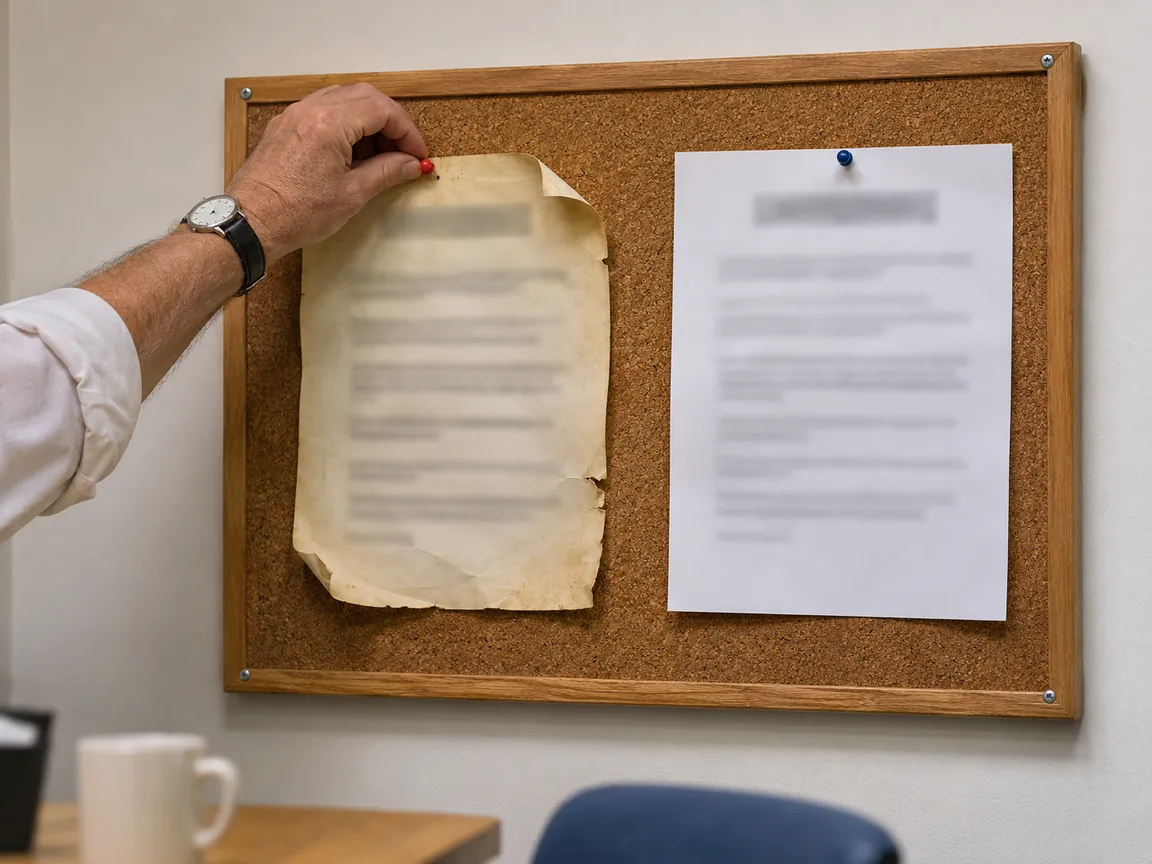
When a new version goes out, pull the old one everywhere on the same day. A faded copy on the staff-room corkboard keeps teaching the old way. The EPA guidance says an SOP that describes a process no longer followed “should be withdrawn from the current file and archived.”
Review on a calendar and on events. The EPA guidance suggests a periodic review, for example every one to two years, and an update and new approval whenever a procedure changes. Store routines change with every system update and layout change, so we would not wait longer than a year. Review sooner when a new POS or stock system goes live, a store layout or range changes, the same check fails in several stores or an incident exposes a gap. When most stores do the task differently from the page, suspect the page before the stores.
Put the review date and a one-line change note on the page, such as “Oct 2026: step 5 added after two shortages.” Stores then see what changed without a meeting. Our guide to the retail store workflow shows where SOPs fit in the daily run of a store.
When software is worth it
A shared drive and a weekly walk are enough for a handful of stores. They stop working when you cannot answer four questions without phoning someone: which version does each store use, who did the task today, what did it look like, and what happened to the problem we found?
Then the SOP needs to live where the work happens. In Bitreport, a recurring SOP is a workflow: you build the checklist once, choose the branches and the roles that do it, set the time and the deadline, and the task appears on staff phones every day or week. Each step can ask for a photo, a note or a number, so proof is part of doing the task. Managers see which stores finished, which are late and what the photos show, and a reviewer can send a photo back with markup until it passes.
A failed audit check can create a corrective task automatically, as described under audits and automatic corrective measures. Microlearning turns the files in your Knowledge Base into short daily quizzes: AI drafts the questions from your own documents, and you keep the ones you want.
Software will not fix an unclear SOP. Write the page first, test it in three stores, then put it where the work happens. If you are comparing tools, our guides to retail store management software and retail operations software cover the options.
Frequently asked questions
What does SOP stand for in retail?
A retail SOP (standard operating procedure) is a one-page written procedure for a task a store repeats: who does it, when, in which steps, to what standard and with what proof. Every SOP uses the same ten parts in the same order, so a manager who has read one knows where to look in all of them.
How long should a retail SOP be?
Keep it to one page for the associate. If the task needs more, split it into two SOPs or move the detail into an attachment, such as a photo of the correct display.
How often should retail SOPs be reviewed?
The EPA guidance suggests a periodic review, for example every one to two years, and an update and new approval whenever a procedure changes. Store routines change with every system update and layout change, so we would not wait longer than a year. Review sooner when a new POS or stock system goes live, a store layout or range changes, the same check fails in several stores or an incident exposes a gap.
What is the difference between an SOP and a checklist?
The SOP holds the standard and the exceptions. The checklist makes sure the steps happen. A checklist with no SOP behind it lists the steps but never says why they matter or what to do when one fails.