

A retail district manager is responsible for the performance of a group of stores. The role combines coaching store managers, reviewing business results, checking operating standards and resolving problems that individual locations cannot solve alone.
The difficult part is deciding where to intervene. One store may need help developing a new manager. Another may have strong sales but repeated audit failures. A third may be waiting for a decision from headquarters. Giving all three the same instructions will not address what is holding each one back.
This guide explains the main district manager responsibilities, how to use store visits well and what evidence to bring back to regional leadership. It focuses on the retail role: leading several stores through the managers who run them every day.
What does a retail district manager do?
District managers turn company objectives into priorities for their stores and hold store managers accountable for progress. The exact authority varies by retailer: hiring decisions, spending approvals and the number of locations should be defined in the employer’s job description.
Dollar General describes its district managers as leading stores within an assigned area to achieve divisional and regional goals. Its store managers, by comparison, run individual locations. That distinction matters: district leadership must consider the needs of several stores when making a decision.
A practical district manager job description should cover these six areas:
Review store and district results, investigate gaps and agree on improvement priorities.
Coach store managers, assess leadership needs and support their development.
Visit locations to evaluate customer experience, store conditions and execution of company standards.
Coordinate staffing needs, management coverage and resources within the authority assigned to the role.
Follow up on audit findings, recurring incidents and corrective actions that have stalled.
Carry store feedback and unresolved decisions to regional leaders and the relevant head-office teams.
These responsibilities connect to the wider retail operations system. A good district manager can explain both what a store needs to change and what support the business must provide to make that possible.
Lead store managers without taking over their stores
A district manager can fix a display during a visit and still leave the store no better prepared for the next campaign. The more useful conversation is about how the store manager checked the instructions, assigned the work and confirmed that it was right.
Ask the manager to walk you through a recent decision. What did they notice? What options did they consider? What happened after they acted? This gives you something specific to coach, rather than a general impression that the store is well run or struggling.
For example, if replenishment repeatedly slips during busy periods, review how the manager plans coverage and responds to demand. Agree on one change they can try, what support they need and when you will review it. Keep the manager responsible for organizing their team; use the district role to remove obstacles or arrange support beyond that store.
ALDI’s US district manager description explicitly includes developing store managers, working with them on staffing and using action plans to improve results. It also describes regular operations calls and one-to-one meetings. The useful principle is continuity: coaching should carry forward between visits.

That includes preparing future leaders. When discussing succession, ask what responsibilities a potential successor has actually handled and what further experience they need. A reliable opening shift does not, by itself, show that someone is ready to manage an entire store. Tie development to observed work and the retailer’s promotion process.
Make each store visit answer a specific question
Start with the previous visit’s commitments. Which changes held? Which issue returned? Which action is waiting for someone outside the store? Then use recent results and the store manager’s input to choose the visit’s focus.
An audit score can identify a location worth investigating, but it cannot explain the cause on its own. A missed check might reflect unclear instructions, unavailable equipment or work that was never assigned. Those problems need different responses.
Use a consistent store visit checklist for the standards that should be evaluated across locations. Add focused observation for the question you came to answer. If the concern is slow service, watch the handoff that appears to be causing the delay rather than assuming the entire team needs retraining.
Before leaving, make the next action concrete. Record the finding, the expected condition, one accountable owner, a deadline and how the correction will be checked. If the store manager cannot approve the required repair or resource, name the person who can make that decision and the next escalation checkpoint.
A photo may be enough to confirm that a display was corrected. It cannot prove that a new service routine works throughout a busy shift. Choose evidence that matches the finding: a photo, a record review, a conversation or another observation on the floor.
The existing store visit report template provides a place to record findings, coaching and follow-up. Use it to keep the next visit connected to the last one.

Resolve problems that cross store boundaries
Consider this invented example. Three stores report the same mismatch between a promotional display instruction and the fixtures they have. Each manager has raised the issue, but each is waiting for a separate answer.
The district manager should establish whether the mismatch is shared before asking all three stores to improvise. Collect a clear example from each affected location, compare the instruction versions and identify the decision needed from the campaign owner. Then communicate the approved response to the relevant stores and confirm that it was understood.

The store managers still own the local setup. The district manager owns coordinating the common issue and escalating it to the team with authority to change the instructions. Requiring another photo from every store will not resolve an instruction that nobody has corrected.
Staffing problems need the same care. Moving a manager from one location to another may help the receiving store while leaving the first one exposed. Check the impact on both locations, the person’s responsibilities and the approvals required before committing to coverage.
When headquarters sends competing requests, bring back a decision rather than a complaint: which deadline is fixed, what capacity is available and which work would move. The retail task prioritization guide explains that discussion in more detail.
Track district performance without hiding weak stores
District totals are useful, but a healthy total can conceal a location that needs attention. Review the district result alongside the store-level distribution and recent change. Compare like periods and account for relevant differences, such as a new opening or a temporary closure, before deciding that a manager’s execution is the cause.
Keep business results and operational follow-up together in the review. Sales, expenses and stock-loss measures belong in the retailer’s approved reporting systems. Visit completion, unresolved findings and repeated failures help you decide what to investigate on the floor. Neither set explains the other automatically.
| Review signal | Follow-up question |
|---|---|
| Store results below plan | What changed locally, and what can the manager influence? |
| Visits late or missed | Is the plan realistic, and which store needs attention first? |
| Corrective action overdue | Is the owner able to act, or is a decision blocking progress? |
| Same finding on several visits | Did the correction address the cause, and was it checked? |
| Leadership coverage gap | Who can cover the role, with what support and approval? |
A completed visit is evidence that the visit happened. It is not evidence that every finding has been resolved. Keep those two questions separate in the district review.
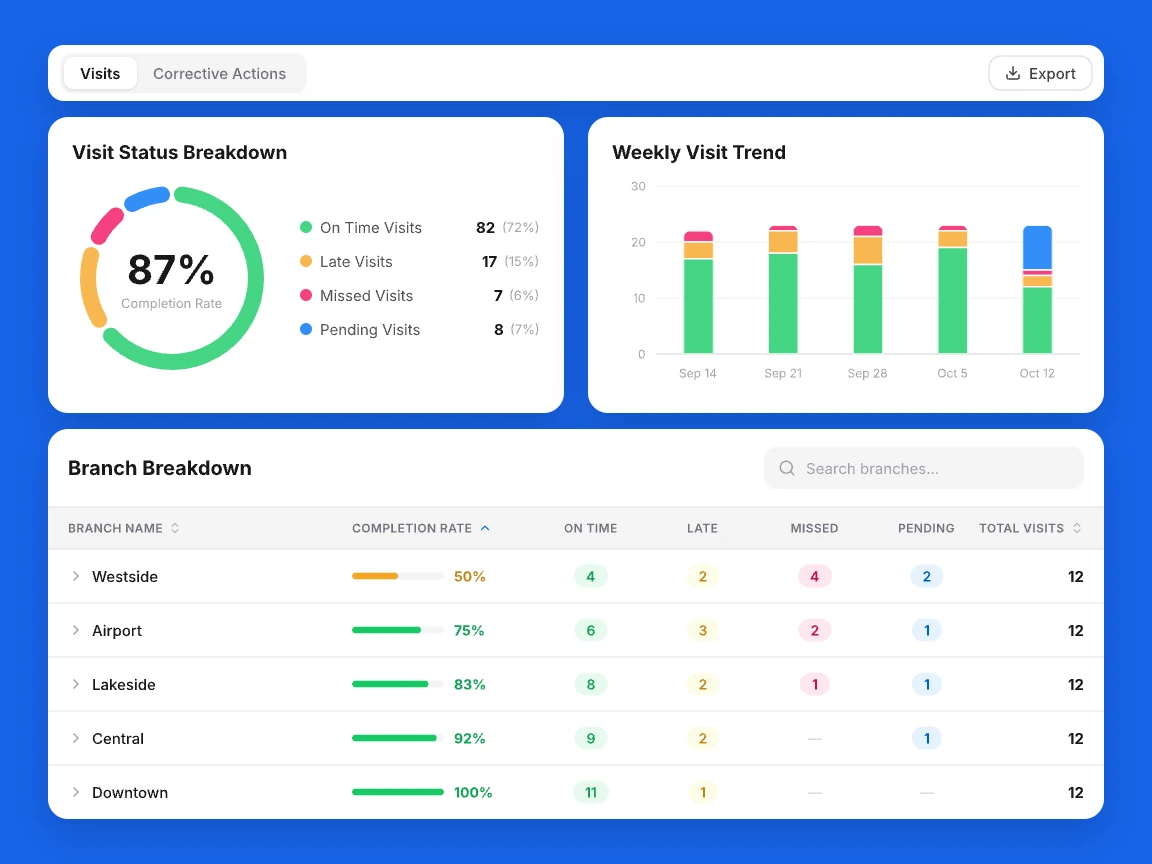
Bitreport’s store visits and visit plans support recurring visit schedules, attached audit templates and visibility into on-time, late, pending and missed visits. District managers can use that view to review coverage, then follow the findings and corrective tasks that need attention. The manager decides which stores need additional support; the schedule is based on configured rules.
If that is the gap in your current process, book a Bitreport demo around one real visit and its follow-up. Ask to see how a finding reaches an owner and how the district manager checks what happened next.
District manager vs. store, area and regional manager
A store manager runs one location and leads the team working there. A district manager leads across locations, usually through those store managers. See the store manager responsibilities guide for the work that stays with the individual store.
Area manager and district manager can describe similar multi-store roles. They are not universal grades with a fixed hierarchy between them. Our area manager responsibilities guide covers that broader field-management role. If a retailer uses both titles, its organization chart and approval rules determine the difference.
Regional leadership may sit above district managers and coordinate a larger territory. Dollar General, for example, distinguishes its regional director role from its district manager role. Do not assume every retailer has that extra layer or gives it the same remit.
For a job description or a new appointment, make the reporting line explicit. Name the direct reports, the territory, the decisions the district manager can approve and the issues that must go to HR, finance, facilities or regional leadership. Titles alone will not resolve a disagreement about who can authorize a change.
Skills and experience to look for
The role requires judgment across stores, not just familiarity with one well-run location. Candidates should be able to interpret business results, coach managers, communicate priorities and follow through when several teams are involved.

Requirements differ by employer. ALDI’s cited US role specifies a business-related degree and daily domestic travel. Its district manager program also includes structured training. Those are examples of one employer’s requirements, not a qualification rule for all retailers. Describe the actual travel expectations and required experience for your territory rather than copying another chain’s advert.
In a hiring or development discussion, ask for a decision and its evidence. How did the person handle a store that missed a target? What changed after their coaching? How did they escalate a recurring problem and confirm it was resolved? A clear explanation of their own contribution is more useful than a story in which a successful team did everything.
For someone moving up from store management, pay particular attention to delegation. They need to support managers with different experience levels while maintaining the same operating standards. That requires listening, clear expectations and the ability to let someone else own the work.
What to establish in the first month
Begin by confirming the district’s scope: stores, direct reports, targets, visit expectations and approval limits. Review open issues with the outgoing manager or regional lead where possible. Separate current commitments from old notes that no longer reflect the store’s condition.
Meet each store manager and discuss the same core questions: what is working, what keeps recurring, what support is missing and what decision they need from you. Use those conversations alongside results and visit history to plan where to spend time. The nearest store should not receive most of the attention simply because it is convenient.
Agree on a review rhythm that leaves room for both coaching and urgent exceptions. A store should know when it will hear from you, what needs to be ready for that conversation and how to reach the right person when something cannot wait.
By the end of the month, aim to have a clear account of the district: the priorities for each store, the managers who need support and the decisions still outstanding with headquarters. That gives your next visit a purpose and gives each store manager a clear point from which to act.