

Retail audit services are outside teams hired to check stores against a checklist and report what they find: shelves, prices, displays, cleanliness, safety, sometimes how staff treat customers. A chain can hire them, run the same checks with its own area managers and store teams, or mix the two. The choice comes down to who has to trust the result, how far your own people can reach, how fast a fix must follow and how often each store needs a check.
This guide is for retailers and franchisors deciding whether to hire retail audit companies or audit in-house. It sorts out what the name covers, compares the two options, shows how to check a quote and lists what to ask a provider. Bitreport makes audit software, not audit services, so this guide recommends and ranks no provider.
The short answer: keep the frequent checks in-house, hire an outside team for what your own people cannot or should not do, and make sure both feed the same list of fixes.
Hire a team or audit in-house: six questions
If you are weighing retail audit services against in-house audits, answer these in order. Each yes points to a piece of the setup, and a run of no answers means you can start in-house.
Does a regulator or certification scheme require an independent audit? Then the independent party it names does the audit. That is not a choice, so the rest of this guide covers everything else.
Can your own people reach every store? If some stores are far away or in another country, hire local auditors for those stores. Travel can cost more than a visit fee.
Does a finding need a fix within days? Then keep the audit in-house, or require item-level results on the day of the visit. A PDF that arrives next week starts the fix a week late.
Does each store need a full check more than a few times a year? Outside visits are usually priced per visit, so every extra one adds a charge. Give frequent checks to store teams and area managers, and use outside visits for a sample.
Do you doubt the scores people give their own stores? Add an outside audit of a few stores each year and compare it with your own scores. The size of the gap tells you how much weight your own scores deserve.
Do you need to see how staff treat customers? A mystery shopper sees what a customer sees. Staff know your area manager on sight.
Questions 2, 5 and 6 point to outside help for a region or a sample. Questions 3 and 4 point to in-house checks for the routine. If you answered no to all six, start in-house and add outside visits when a gap shows.
What retail audit services include
Providers sell six different services under the name retail audit services, and a quote for one is not a quote for another. Sort your need first.
A mystery shopper sees only what a customer sees, while an auditor checks the store against a written standard and can look behind the scenes, such as the stockroom. This guide covers store compliance audits, mystery shopping and franchise audits, which work from the same kind of checklist. Those are the services a retailer can also run in-house. For the checks themselves, see our retail audit guide.
A hired audit team is not automatically independent
Many buyers hire retail audit services to get independence. ISO 19011 is the international guideline for auditing management systems, and ISO’s own overview of auditing describes an internal audit as one conducted by, or on behalf of, the organization itself. By that wording, a team you hire to audit your own stores is still doing an internal audit for you. Third-party audits are the ones run by external, independent bodies, such as certification bodies.

So independence comes from how you set the work up, not from who sends the invoice. Four habits protect an audit from pressure. The provider or head office, not the store manager, picks which stores to visit. Nobody edits a result except through a written dispute step. Neither the provider’s fee nor an auditor’s bonus depends on the scores. And the report goes first to the person who owns the audit program, not to the area manager of the scored stores.
The same ISO overview says that in many cases, particularly in smaller organizations, an auditor can show independence through freedom from responsibility for the activity under audit. In-house audits can meet that test: have area managers audit stores they do not manage, and compare their scores with a small outside sample each year. Our retail compliance audit guide explains how that check on the checkers works.
Outside team or in-house: how they compare
The table sets retail audit services from an outside team beside an in-house audit. It describes typical cases, and your contract and your tools can change any row.
| Factor | Outside team | In-house audit |
|---|---|---|
| Independence | Auditors do not work in or report to the store. That holds only if nobody edits their results. | Area managers know the stores, but people who score their own stores can be lenient. |
| Reach | Local auditors can cover distant stores and other countries. | Limited by area managers’ time and travel. |
| Cost as visits grow | Priced by stores, checklist length and frequency, so more visits cost more. | Mostly staff time you already pay for, so an extra check costs hours, not an invoice. |
| Time to a fix | Starts when the report arrives. | Findings can become tasks during the visit. |
| Knowledge of your standards | Needs a briefing for each program and each change. | Teams know the standards and can adapt in a day. |
| Evidence | Dated, location-stamped photos are common in provider offers, so confirm them in the contract. | Depends on your tools. You can require photo proof for each item. |
| Customer view | Mystery shoppers see the store as a customer does. | Staff know the area manager, so the visit is never anonymous. |
| Checking a fix | A revisit is another visit and usually another charge. | A photo from the store can close the item. |
ASQ, writing about quality audits in general, notes that a single-purpose follow-up audit is costly and is normally combined with the next scheduled audit. For a visible fix, a photo from the store is the cheaper check. The three rows that favor the outside team, independence, reach and the customer view, are the ones that justify outside visits even when the routine stays in-house.
What retail audit services cost
No honest guide can print one price for retail audit services. Quotes depend on how many stores you have, how long the checklist is, how often each store needs a visit, how far apart the stores are and how fast you need the report. They also come in different shapes: per visit, per store per month, a software fee plus visits, or a custom quote for a large network. Turn every quote into the cost of one completed visit before you compare.
Published figures show how wide the range is. A UK provider’s price list for a 15-question retail compliance audit runs from £80 a visit at the smallest volume to £35 at 100 to 199 audits, before VAT. A US provider’s cost guide puts evidence-backed audits at roughly $200 to $850 a visit and names the four quote shapes listed above. Each price is one provider’s own figure for its own scope, not a market average.
Compare a quote with your own cost
Start with your own cost per audit, counting every hour and not only the hour in the store:
Cost of an in-house audit = (hours in the store + travel hours + report hours) × loaded hourly cost + travel expenses
Loaded hourly cost is pay plus the employer’s extra costs, divided by paid hours. An area manager who spends 3 hours in the store, 2 hours on the road and 1 hour on the write-up, at $40 an hour loaded, plus $15 for fuel, costs (3 + 2 + 1) × $40 + $15 = $255 for one audit. The figures here are examples, so use your own.
Then add your own time to the provider’s price, because someone still has to brief the auditors, read the report and assign the fixes:
Cost of an outside audit = price per visit + (your hours per visit × loaded hourly cost)
A quote of $300 per visit plus 1.5 hours of your time at $40 an hour comes to $300 + (1.5 × $40) = $360. On these invented numbers the in-house audit costs less. Travel decides most of the gap, though: for a store a day’s drive away, road hours and an overnight stay can push the in-house figure past the outside quote. Cost per audit is also only half of the comparison, so note the days from each visit to a confirmed fix as well.
Nine questions to ask a provider before you sign
Price is one line of a quote for retail audit services. These questions show what the price buys.
Who writes the checklist? You should. A provider’s standard list tests what it already knows how to test.
Who will visit your stores, and how does the provider check their work? Ask for the briefing material and for how the provider compares auditors, for example by sending a second person back to a sample of stores.
What does one visit include? Time on site, number of photos, whether the stockroom is in scope, and what happens when a store is shut or a manager refuses entry.
How is each visit verified? Dated, location-stamped photos tied to checklist items show that the visit happened and where.
How soon does the result reach you? Ask for the time from visit to report, and whether the provider reports a critical finding the same day.
What form does the data come in? Item-level results with photos, not only a score or a PDF, so each failed item can become a task. Ask for a sample export.
Who sees the draft, and what can a store dispute? Ask how a store can challenge a finding and whether a result can change after a dispute.
What does a revisit cost? A second visit to check a fix is usually another charge, so ask for the price or check fixes with photo proof from the store.
What does it cost to leave? Check the minimum term, the notice period and who owns the photos and data afterwards.
Our retail audit report guide shows what a useful report holds, which makes a good test for the sample export.
Test a provider on five stores first
Before you sign for retail audit services, run a pilot where you can check the answers. Pick five stores your area managers know well. Have the provider and one of your own people audit each store against the same checklist, on the same day if you can, without seeing each other’s results. Shelves change by the hour, so same-day visits matter.
Then compare the two results item by item and work out one number:
Agreement rate (%) = (items scored the same by both ÷ items checked) × 100
If both of you check 40 items in a store and score 38 the same, the agreement rate is (38 ÷ 40) × 100 = 95%. The example uses invented numbers. Read the disagreements before you read the rate: an item the provider found and your manager missed is the pilot paying for itself, and an item marked for something the store cannot control usually means the checklist was misread.
Also note how many days the report took, whether the results came as item-level data with photos, and how the provider handled a store that disputed a finding. Repeat the pilot before you renew.
What a hybrid setup looks like
A workable mix of in-house checks and retail audit services has three layers. Store teams check what can change within hours and photograph it. Area managers audit the full list on their visits. An outside team audits a sample of stores each year and, if customer service matters to you, shops a few stores for the customer view.
For a 60-store chain that could mean daily checks in every store, three area managers who visit each store every two months and an outside team that audits 12 stores twice a year. The numbers are an example. Set yours from the risk in each store, not from the budget. Our retail audit frequency guide shows how store format and repeated findings change how often a store gets visited.
What makes a hybrid work is the hand-off. Ask the outside team to score against your checklist, or map its items to yours, so you can compare the two sets of results. Put every failed item into the same list of fixes as the ones your own people find, with an owner and a deadline. If outside findings arrive only as a PDF, they wait for someone to retype them.
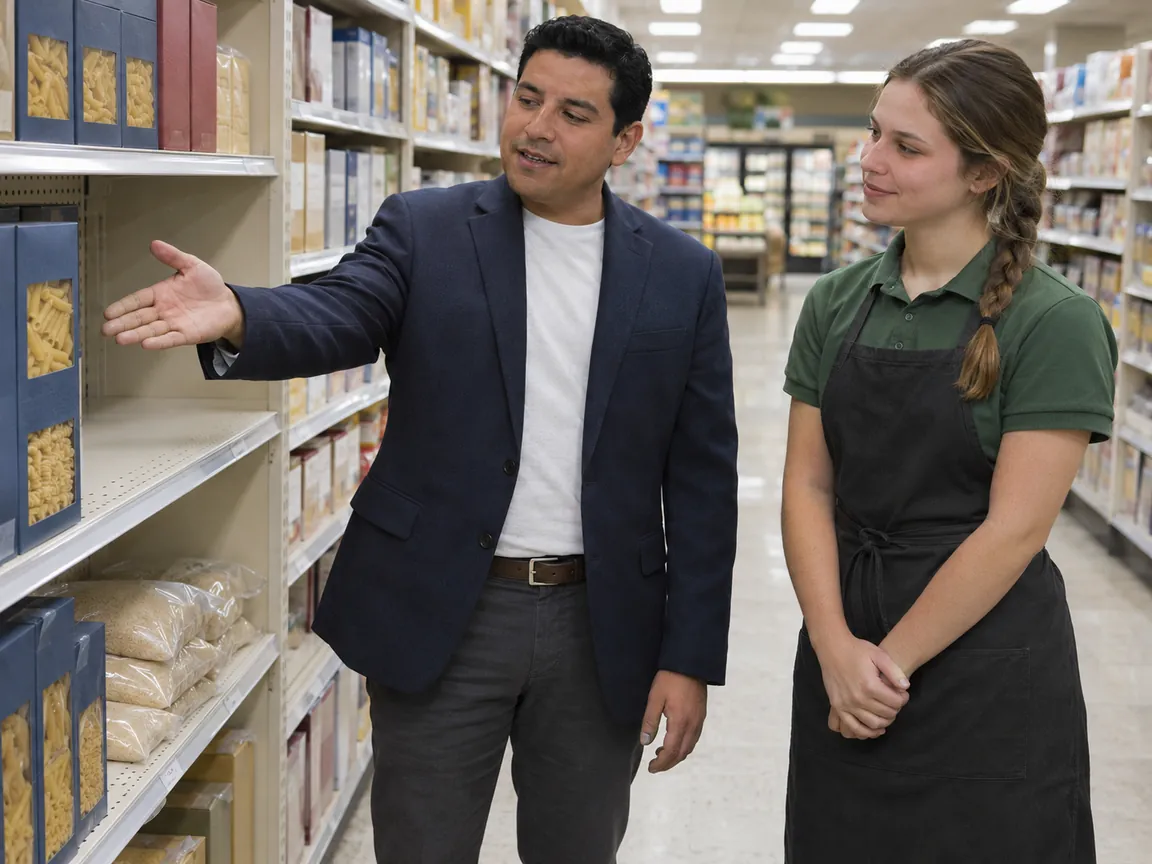
Tell store teams that outside checks happen. The Mystery Shopping Providers Association’s guidelines say mystery shopping reports must not be the only justification for dismissals or reprimands, and they advise telling staff that mystery shoppers may check their performance. The guidance covers mystery shopping, but the same fairness applies to any audit score.
Where Bitreport fits
Bitreport covers the in-house side of this choice and the hand-off from any audit, including an outside one. Store staff or field managers complete audits in the field on mobile, and you can adapt templates by region, store type or audit goal. A failed item creates a corrective task on the spot, with a deadline, an assignee, instructions and a request for photo proof.
Store visits let area managers set recurring visit plans with the exact audits attached. Managers can track audit scores and resolutions in real time and export reports for head office or regulators. If you hire an outside team, ask for item-level results with photos, so each failed item can become a task in the same list as the ones your own people find.
The Galileo case study describes a men’s fashion retailer in Slovenia, Croatia and Serbia where coordinators run unannounced quality audits with guided checklists. The retailer reports a quality compliance rate of 96%, up from 80%. The figure is the customer’s own, and other chains may see different results.
Bitreport does not sell retail audit services and does not decide how many outside visits you need. People set the standard and the sample, and the tool shows what the audit found and whether the store fixed it.
Frequently asked questions
What do retail audit services include?
Providers sell six different services under the name retail audit services, and a quote for one is not a quote for another. A trained auditor walks the store against a checklist: shelves, prices, displays, cleanliness, safety. You usually get dated photos and a scored report.
How much do retail audit services cost?
Quotes depend on how many stores you have, how long the checklist is, how often each store needs a visit, how far apart the stores are and how fast you need the report. They also come in different shapes: per visit, per store per month, a software fee plus visits, or a custom quote for a large network. Turn every quote into the cost of one completed visit before you compare.
Is mystery shopping the same as a retail audit?
A person visits as a customer and reports what they saw and how staff served them. A mystery shopper sees only what a customer sees, while an auditor checks the store against a written standard and can look behind the scenes, such as the stockroom.
Can we run retail audits ourselves instead of hiring a team?
Store teams check what can change within hours and photograph it. Area managers audit the full list on their visits. An outside team audits a sample of stores each year and, if customer service matters to you, shops a few stores for the customer view. Give frequent checks to store teams and area managers, and use outside visits for a sample.