

Retail audit frequency is the interval between planned reviews of a store’s operating standards. Choose that interval according to what could go wrong, how quickly conditions change and what previous visits found. A stable location and a newly opened store may need different levels of attention.
For an internal programme, a monthly area-manager audit can be a starting point to test, alongside routine store checks and earlier follow-up on specific findings. It is a planning choice, not an industry benchmark or a substitute for required inspections. Some stores will need closer supervision; others may justify a longer interval once their results and follow-through support it.
The useful question is: what needs checking, by whom, and before what could happen next? This guide explains how to build that schedule, adjust it for different store formats and keep corrective work moving between visits.
Separate store routines from management audits
A daily opening check and an area manager’s audit do different jobs. The opening check helps the team prepare the store for customers. The audit examines whether agreed standards and operating routines are being followed, including what happened to earlier findings.
If both use the same long questionnaire, the team may spend time recording the same information without giving management a better view. Define each layer first:
| Review | Main purpose |
|---|---|
| Opening, closing or shift check | Confirm the store is ready for the next operating period |
| Area-manager audit | Review agreed standards and how routines work in practice |
| Targeted follow-up | Verify a particular finding or corrective action |
| Change-related review | Check a new layout, process, opening or other significant change |
Use your retail audit programme to connect these layers. The area manager can sample completed routines and observe the work, while the store team continues its normal checks. A completed checklist is useful evidence, but it does not automatically establish that the process works across every shift.
Keep mandated inspections and specialist checks on their own requirements. The person responsible for compliance should confirm which obligations apply to each location, activity and item of equipment before the internal calendar is approved. Our guide to the retail compliance audit shows how to write each compliance check with a pass condition and proof.
Set a baseline, then explain each exception
Start with a written baseline for comparable stores. For example, you might trial a monthly general operations audit, then schedule a shorter follow-up sooner when a specific issue needs verification. Record why the interval was selected and when you will review it.
Avoid filling every available day with a full audit. A visit needs time for observation, questions, recording findings and agreeing actions. The calendar also needs room to check whether those actions worked.
The Canadian Centre for Occupational Health and Safety identifies factors such as incident history, work processes, shifts and new equipment when planning workplace inspection frequency. That guidance concerns health and safety inspections; it supports considering local conditions rather than assigning every site the same interval.
For broader store operations, use the following as practical planning questions:
What could deteriorate between visits, and how would the team notice it?
Which findings recur, even after someone marks them resolved?
Has the manager, team, layout or operating process changed?
Does the store provide usable evidence and complete agreed follow-up?
Have previous visits covered the shifts and operating conditions that matter?
Write the reason beside the next visit date. “New supervisor and repeated delivery-area findings; review in two weeks” gives the manager a clear purpose. “Low score; audit more” does not explain what the next visit should establish.
Match the audit scope to the store format
Store format changes what needs attention. It does not, by itself, determine a universal weekly or monthly rule. Two grocery stores can have different processes, equipment, staffing patterns and operating histories.
Grocery and food retail
A grocery operation may need frequent routine checks around receiving, stock rotation, cleaning and food handling. Those controls should follow the business’s approved procedures and applicable requirements. A periodic area-manager audit reviews how the routines are carried out and whether exceptions receive appropriate follow-up.
Do not treat a monthly store audit as a replacement for a temperature check or another time-sensitive control. Use the grocery store operations guide for the wider operating context, then define the audit’s role within those routines.
Fashion and general merchandise
Display changes, deliveries and seasonal peaks create useful points for focused reviews. A promotion task can require a store photo before launch, while a later management visit examines the broader execution and store standards.
Keep those activities distinct. A visual merchandising photo submission tracks a particular display task; a visual merchandising audit checks standards during a visit. You may need both without repeating the entire store audit after every display change.
Franchise and mixed-format estates
Keep a common set of brand standards, then add the checks relevant to each format. A store with food preparation should not inherit the same scope as one selling only packaged general merchandise.
Record any audit commitments in the franchise or operating agreement separately from your discretionary visits. If an internal schedule needs changing, check those commitments before extending the interval. The operational planning model in this article does not determine contractual inspection frequency.
Use findings and changes to bring a visit forward
The original calendar is a starting point. New information can justify an earlier visit, a narrower check or extra support for the store manager.
In its discussion of management-system audits, EU-OSHA’s OSHwiki connects audit frequency and coverage with system maturity, risk, previous reviews and organizational change. The retail decisions below are practical applications, not frequencies prescribed by that source.
A low overall score is one signal, not the whole decision. One important unresolved item can deserve attention even when the rest of the store scores well. Equally, several minor presentation issues do not automatically call for the same response as a serious operating failure.
A six-store audit schedule example
Consider an area manager responsible for six homewares stores. The business chooses to trial monthly operations audits, with follow-up dates set separately for findings. The example below is illustrative; the intervals are not a recommended minimum for every retailer.
The manager now has several types of appointment rather than six identical repeat visits. A support visit, a focused observation and a full audit each have a stated purpose. They can sometimes happen on the same trip, but their outcomes should still be recorded clearly.
Build travel and reporting time into the plan. If the manager cannot complete the agreed scope without rushing, revise the route, scope or available capacity. Silently postponing visits makes the written schedule unreliable.
Keep a short audit planning record
A calendar date alone does not explain what should happen at the store. Keep a simple record that another manager could understand if they had to cover the visit.
Store and responsible auditor.
Type of visit and the standards or processes in scope.
Planned date or time window, including the operating activity to observe.
Reason for the current frequency and any temporary change.
Open findings to revisit and the evidence needed for verification.
Date and owner of the next scheduling review.
For comparable results, keep the core questions consistent and document changes to the checklist. A better score after removing difficult questions is not evidence that the store improved. Where an item does not apply, explain that status so it is not confused with a passed check.
Our retail audit checklist provides a starting structure for the visit itself. Adapt its sections to your stores, then record the audit schedule and any required specialist checks separately.

Make follow-up independent of the next full audit
An audit’s findings create work with its own owners and deadlines. Those deadlines should reflect the issue, not simply the date on which the area manager plans to return.
For each finding, record the expected correction, responsible person, due date and evidence needed to check the result. If the same problem keeps returning, examine the underlying routine as well as the visible correction. Our corrective action report template shows how to keep that record together.
A photo may be enough to verify a visible display correction. It will not answer every question about a process, an intermittent fault or a condition that needs a competent specialist to assess it. Choose verification that matches the finding.
Bitreport’s audits and checklists let teams record store findings and connect them with corrective tasks. This gives the manager a place to follow the work between visits and review its status before returning.
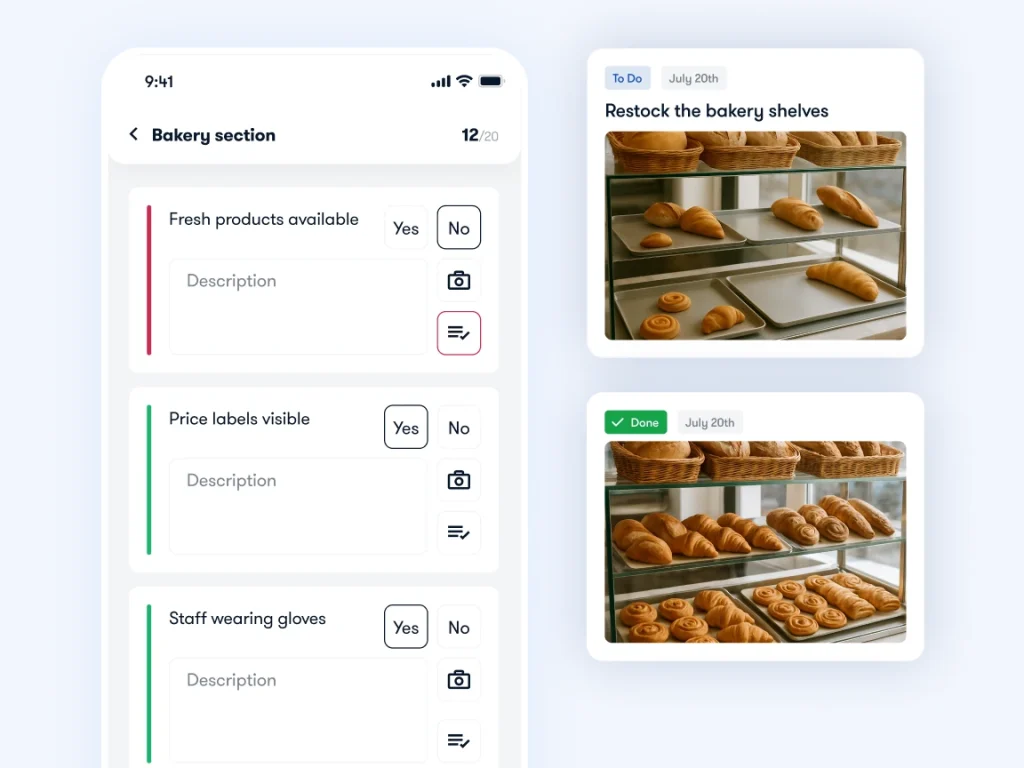
The scheduling decision still belongs to your operations team. Bitreport’s visit plans and rotated visits follow configured static rules; they do not automatically choose the next visit from audit scores or task data. Use the evidence to make a management decision, then update the plan accordingly.
To see how recurring plans, attached audit templates and the on-time, late and missed view fit together, see Bitreport Store Visits.
Review whether the schedule is doing its job
At the end of your trial period, assess what the visits revealed and what happened afterward. Counting completed audits alone can hide a programme that repeatedly finds the same problems without resolving them.
Look at recurring findings, overdue actions, stores that repeatedly miss their visit window and the time from submission to verification. Check whether busy shifts, new processes or distant locations are being missed because they are harder to fit into the route.
Discuss the results with store managers. Too much repeated data entry may call for a shorter questionnaire or clearer division between daily checks and management audits. Slow follow-up may call for a better owner or more support, rather than another full inspection.
Keep the next calendar tied to those decisions. Record what changed, why and when it will be reviewed again. That makes audit frequency an operational choice you can explain and improve.
If you are evaluating software, bring one recurring store finding and your current visit schedule to a 30-minute Bitreport demo. Walk through the audit, assigned follow-up and evidence review to see how the workflow would fit your stores.