

An assistant store manager helps run a retail location by directing the team, organizing daily work, supporting customers, checking merchandise and maintaining operating standards. When the store manager is away, the assistant takes charge within the authority the retailer has assigned to the role.
That last point matters on an ordinary afternoon. A delivery arrives while the checkout line grows and an associate calls out. Someone has to decide what moves, who covers the floor and which problem needs the store manager. Those decisions are a central part of the assistant store manager’s job.
Take responsibility for the shift from the start
Before assigning work, find out what the previous team left behind. Read the handover, walk the sales floor and check who is actually available. An unfinished delivery, a broken fixture or a customer waiting for a callback can change the plan before the shift begins.
Start with priorities and coverage. Identify the work that must happen during this shift, assign named owners and explain what a completed task should look like. Confirm who covers customer-facing areas while colleagues receive goods, take breaks or complete checks. Use the retailer’s staffing procedures when adjusting coverage.
A useful instruction sounds like: “Check the promotional endcap against the brief by 11:00 AM, correct the labels and tell me if anything is missing.” The employee knows the task, the deadline and when to ask for help. “Sort the promotion out” leaves all three open to interpretation.
The assistant also needs to recognize when the plan no longer fits. If the store gets busy, move a lower-priority task, tell its owner and record when it will resume. Our guide to retail task prioritization explains how to make that trade-off without leaving forgotten work behind.
Keep customers and the sales floor moving
Support associates with questions and complaints, check that service areas are covered and step in when an issue exceeds an employee’s authority. Handle refunds, overrides and other customer decisions within the retailer’s rules; know who can approve an exception.
Look for patterns during the shift. If three customers cannot find the same item, check the shelf, stock availability and signage. If a new associate repeatedly needs help with a routine transaction, arrange coaching. Record unresolved promises to customers with enough detail for the next lead to follow through, using the company’s approved system for customer information.
Follow stock from delivery to the shelf
The assistant may help coordinate receiving, replenishment, stock checks and merchandise presentation. The exact mix depends on the store. Dollar General’s retail careers page describes its assistant role around supporting the store manager, guiding the team, managing merchandise and keeping daily operations on track.
On the floor, that means checking whether the right products are ready to sell: delivery discrepancies reported, damaged goods handled through the agreed process, stock put away correctly and displays set to the current brief. For fashion stores, this includes visual merchandising standards; in grocery and other retail formats, it includes the relevant merchandising and product-handling routines.

A delivery being received is only one part of the job. If the products remain in the backroom while their shelf is empty, the assistant needs to identify the hold-up, assign the remaining work and check the result. Stock records and adjustments belong in the retailer’s inventory system, with the required permissions.
Complete opening, closing and cash controls
Where the role includes opening or closing, follow the store’s approved checklist, key-control procedures and escalation contacts. Verify the required checks and record exceptions. Cash counts, deposits and reconciliation should follow the retailer’s specific process and authorization limits.
The assistant also responds when operating standards slip during the day: an obstructed aisle, a damaged fixture or a failed equipment check. Follow the relevant safety or incident procedure, take the immediate action assigned to the role and contact the responsible person. A problem that needs attention now should not wait for an end-of-shift report.
Know which decisions are yours when the manager is away
The store manager is responsible for the broader operation of the location. An assistant owns the areas, shifts and decisions delegated to them. A shift lead may also direct a team, but the title alone does not tell you who can change schedules, authorize spending or make personnel decisions.
Read the store manager responsibilities guide alongside the assistant’s role description and make the boundaries explicit. In a large store, an assistant might own a department; in a smaller location, they may cover the whole store while the manager is off-site.
This is a practical set of decisions to agree before someone takes charge, rather than a universal approval policy:
| Decision area | Agree before the shift |
|---|---|
| Floor coverage | Who may move staff between tasks and adjust break coverage? |
| Customer resolution | Which refunds or exceptions can the assistant approve? |
| Staffing | Who approves extra hours, schedule changes or replacement cover? |
| Cash and stock | Which counts, adjustments and discrepancies require another review? |
| People and spending | Who approves hiring, formal employee action, purchases or repairs? |
The store manager’s absence does not automatically expand those limits. Name a backup contact for urgent decisions, including an area or district manager where appropriate. Make sure the assistant knows how to reach that person and what facts to provide.
An ALDI assistant store manager posting illustrates why the details matter: it includes revising schedules under company procedures when the store manager is absent, making hiring recommendations and referring concerns when needed. Those are defined responsibilities at that employer, not permissions every assistant manager has.
Coach employees while the work is happening
Assistants spend time close to the work, which gives them opportunities to notice where someone needs help. Explain the expected result, demonstrate the task and watch the employee try it. Give feedback on the specific action they can change.
For example, if an associate repeatedly replenishes the wrong shelf position, check whether they can identify the product and read the shelf label. Walk through one item together, then ask them to complete the next one. Repeating “be more careful” gives them little to work with.

Keep the store manager informed about progress, recurring errors and development needs. Share observations privately and through the appropriate channel. Day-to-day coaching and recommendations can support formal performance management; the authority to make formal decisions still needs to be defined.
Coaching also matters when a colleague is ready for more responsibility. Let them lead a short briefing or own a small task, with a clear check-in. The assistant should be able to point to what the employee can now do independently, rather than simply reporting that training took place.
Check the work and explain what needs attention
An assistant manager helps the store manager understand what happened on the floor. Review the measures relevant to the assigned area, such as sales against the shift plan, service issues, stock discrepancies and completion of required routines. Use them to choose the next action.
Suppose a promotion is behind expectations. Before concluding that the team needs to sell harder, check whether the display is ready, the products are available and the prices match the brief. Report what you found and what the team changed. A useful update connects an observed issue to a specific action.
For daily assignments, completion needs a clear definition. A display task may require the right products, labels and layout; a repair needs confirmation that the issue has been resolved. A tick on a task list should mean the agreed work was checked.
Bitreport’s task management supports assigned work, recurring tasks and photo evidence. An assistant can use those records to follow up on daily store work and show the manager what remains open. The retailer defines the standards and decides whether the evidence is sufficient.
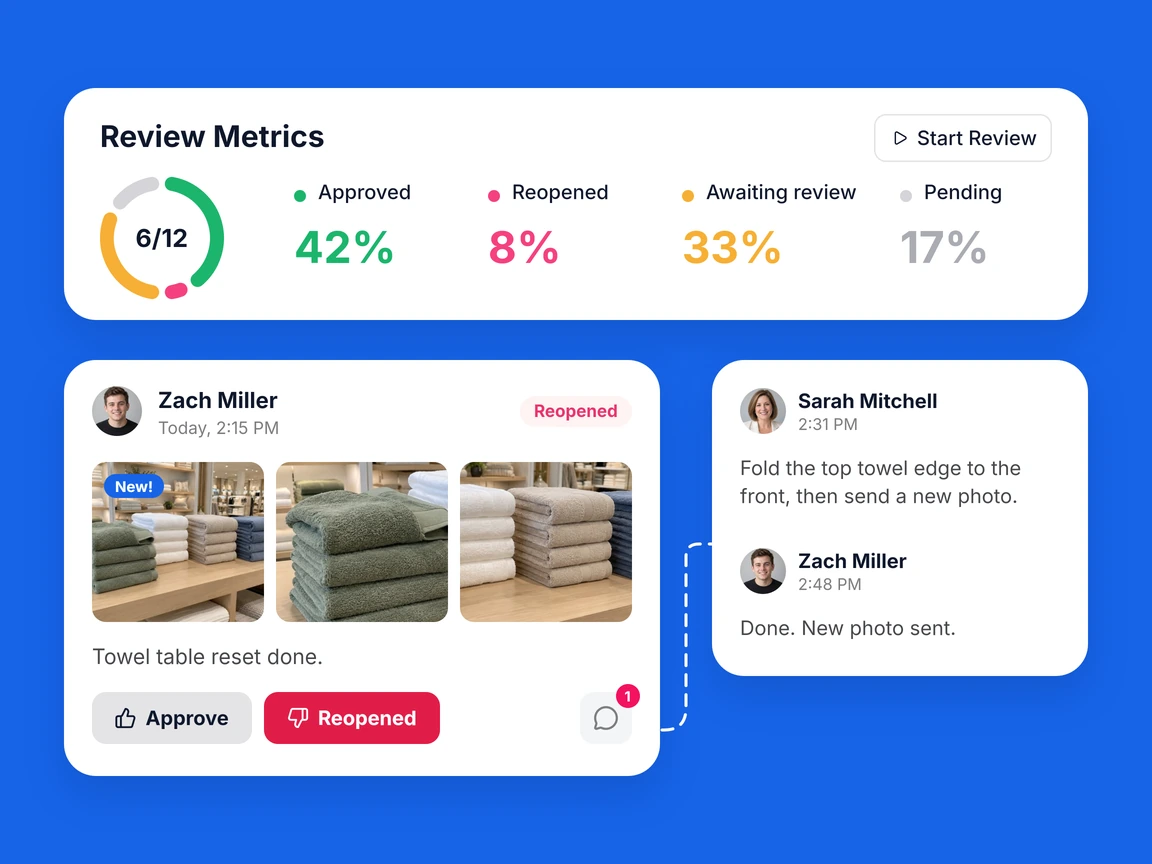
If your managers spend the handover reconstructing task progress from messages, a Bitreport demo can show how the task workflow keeps instructions and completion evidence together.
Leave a handover the next lead can act on
The assistant’s responsibility continues through the transfer of unfinished work. A useful handover identifies what is open, what has already happened, who owns the next action and when it is due. The incoming lead should understand the priorities before the outgoing lead leaves.
Consider this invented example: at 3:30 PM, a delivery is checked in but one carton is damaged. The stock has been separated under the store’s procedure, and the discrepancy has been recorded. Replenishment of the unaffected products is still due by 4:00 PM.
“Delivery issue, please check” forces the next lead to investigate again. A clearer handover records the damaged carton reference, where it is being held, who is following up on the discrepancy and who will finish replenishment. If the incoming lead takes over an action, update its owner and confirm the change.
Use the retail shift handover checklist guide to decide what to review together. The matching template helps you record open actions with an owner and due time.

Write an assistant store manager job description around the actual store
A job description should make the role usable for both the person hiring and the person doing the work. Name the reporting line, the store or department covered and the responsibilities the assistant will take on when the manager is absent.
An adaptable role summary could read:
“The Assistant Store Manager supports the Store Manager in running daily store operations. The role directs assigned shifts, supports customers and colleagues, coordinates merchandise and operating routines, checks completion of delegated work and hands over unresolved issues. When acting as the lead on duty, the assistant follows the company’s decision limits and escalation procedures.”
Before using that summary in a vacancy or internal role document, specify:
The opening, closing, cash-handling and stock duties the role actually includes.
The staffing, customer-resolution and purchasing decisions the assistant may make.
The required availability, relevant experience and systems knowledge for this store.
The outcomes reviewed with the manager, including task follow-through, team development and service standards.
Requirements vary by employer. The ALDI posting cited above prefers a high school diploma or equivalent and prior retail and management experience. Treat those as that employer’s criteria, not a required qualification for every assistant store manager.
Look for evidence of delegation, calm customer handling, accurate recordkeeping and sound judgment under pressure. Ask candidates to explain how they would handle a delivery, a short-staffed shift and a waiting customer at the same time: which action comes first, what they delegate and when they ask for support. Their reasoning helps reveal whether they can turn a list of responsibilities into a workable shift.
Frequently asked questions
What does an assistant store manager do during a shift?
An assistant store manager directs the team, organizes daily work, supports customers, checks merchandise and keeps operating standards in place. On a shift that means reading the handover, assigning named owners to tasks, keeping the sales floor covered, following stock from delivery to the shelf, completing opening, closing and cash controls where the role includes them, and handing over open work.
What decisions can an assistant store manager make when the store manager is away?
Only the ones the retailer has delegated. An assistant owns the areas, shifts and decisions assigned to the role, and the store manager’s absence does not automatically expand those limits. Agree in advance who may move staff, which refunds or exceptions the assistant can approve, who approves extra hours or schedule changes, and who approves hiring, purchases or repairs. Name a backup contact, such as an area or district manager, for urgent decisions.
How is an assistant store manager different from a store manager or a shift lead?
The store manager is responsible for the broader operation of the location. The assistant owns the areas, shifts and decisions delegated to them. A shift lead may also direct a team, but the title alone does not tell you who can change schedules, authorize spending or make personnel decisions, so check the role description and the agreed decision limits.
What should an assistant store manager job description include?
Name the reporting line, the store or department covered and what the assistant takes on when the manager is absent. Then specify the opening, closing, cash-handling and stock duties, the decisions the role may make on staffing, customers and purchasing, the required availability and systems knowledge, and the outcomes reviewed with the manager. Requirements vary by employer: ALDI’s posting, for example, prefers a high school diploma or equivalent and prior retail and management experience.