

Supermarket store operations are the daily activities that keep a grocery store ready to trade: receiving deliveries, replenishing shelves, running fresh departments, maintaining food safety, serving customers and handing unfinished work to the next shift.
The challenge is coordinating those activities while the store stays open. A late delivery affects the backroom and the shelves. A busy checkout needs support without leaving a fresh counter unattended. A refrigeration problem needs a response even when the manager is dealing with another issue.
For a store manager, the practical question is: who owns each check, when must it happen, and what happens when something fails? This guide sets out a department-by-department approach, a daily operating rhythm and a worked handover example you can adapt to your supermarket.
What supermarket operations need to cover
A supermarket has several operating teams sharing the same stock, space and trading day. Its routines need to connect the sales floor, fresh departments, backroom and front end, rather than leave each department to manage its own list in isolation.
Our broader grocery store operations guide covers common improvement areas. Here, the focus is the daily coordination behind them: department standards, timing, exceptions and follow-up. For a wider view across retail formats, see our guide to retail operations.
Start with a short operating plan for each department. It should name the responsible role, the checks required at each point in the day, the evidence needed and the person who can resolve exceptions. Add a backup for breaks, absence and shift changes. A role such as “duty manager” is useful in the standard; the live assignment should identify the person covering it today.
Keep transactional records in their appropriate systems. Purchase orders, stock balances, till transactions and staff schedules provide inputs to the operating plan. The plan turns those inputs into work: inspect a delivery, refill a shelf, investigate a discrepancy or arrange trained cover.
Set clear standards for each department
Receiving and the backroom
Plan receiving around the delivery schedule and the people available to handle it. Assign someone to check deliveries against the relevant order or delivery record, inspect condition and follow the store’s acceptance procedures. Record shortages, damage or other exceptions where purchasing and the department lead can find them.
Receiving is not complete when the vehicle leaves. Stock still needs to reach its approved storage location, discrepancies need an owner, and the receiving area needs to be cleared. Identify any goods awaiting a decision so another shift does not treat them as available stock.
For a late delivery, the duty manager should reset the replenishment plan and communicate which departments are affected. Otherwise, the morning team may keep searching for stock that has not arrived.

Shelf replenishment and stock rotation
Separate planned replenishment from gaps that appear during trading. Night or early shifts may handle larger fills; daytime teams need an agreed way to prioritize empty shelves, high-demand lines and promotional stock while keeping customer routes clear.
Give each aisle or zone an owner and define what completion means. A filled shelf can still have incorrect labels, misplaced products or stock that has not been rotated according to store policy. Where stock is unavailable, record the exception rather than repeatedly assigning the same fill task.
Date checks also need a defined route and frequency. Our retail expiration date tracker guide explains how to record the item, location, printed date and follow-up. A tracker supports the physical check; it does not replace looking at the products on the shelf.
Produce and bakery
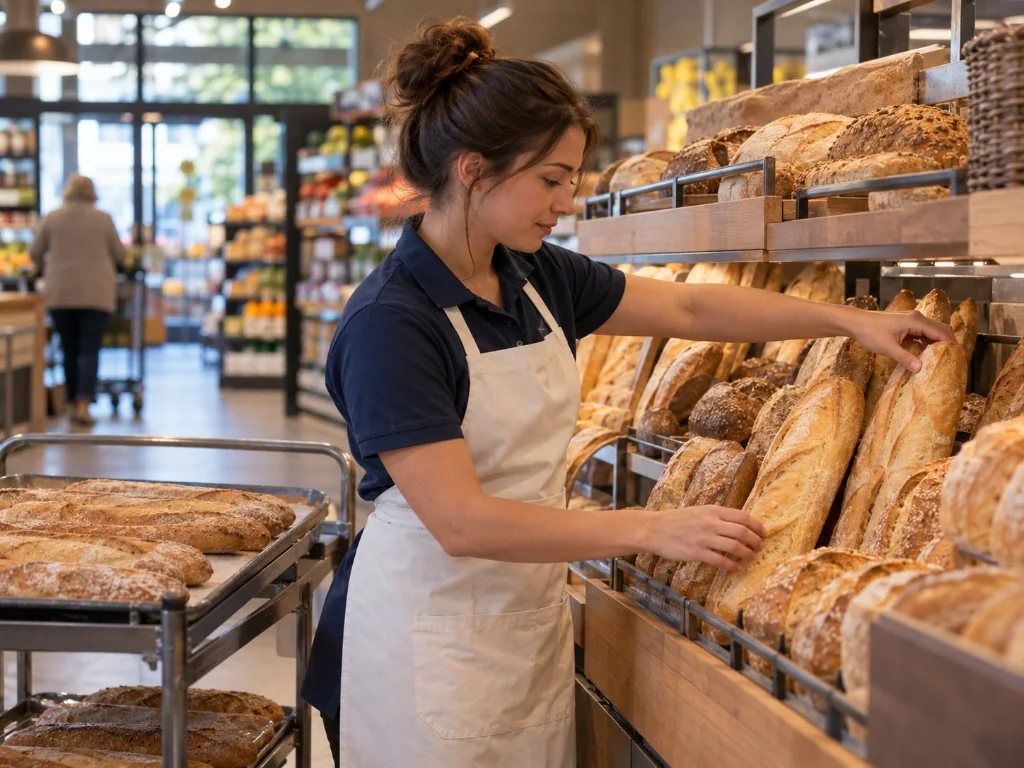
Give produce and bakery their own opening and trading checks. These might include presentation, product condition, stock rotation, labels and cleaning, according to the department’s approved procedures. A check before opening does not cover changes that happen during a busy morning.
Connect replenishment or production decisions to the day’s sales and waste information. Record what was discarded and why using the store’s agreed categories. “Waste” alone gives the next review little to work with; damage, quality deterioration and overproduction point to different actions.
When a department cannot meet the planned display or range, tell the duty manager what is missing and what action is underway. Do not leave the next team to discover the same gap during its first walk.
Deli, meat, seafood and other service counters
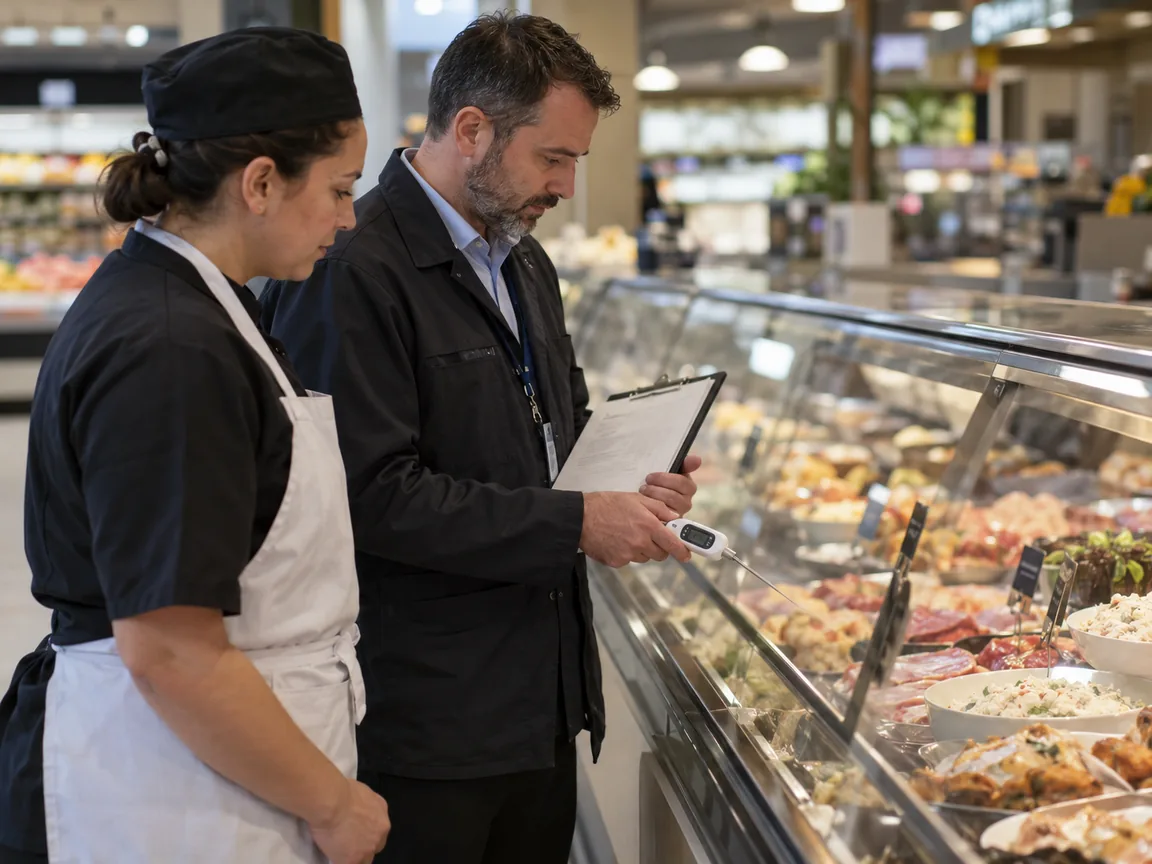
Each service counter needs procedures suited to its products, equipment and local requirements. Define the opening checks, checks during service, cleaning responsibilities and closing steps in that department’s SOPs. Make clear which activities require trained staff and who covers breaks.
The manager’s role is to verify that the required work happens and that deviations receive the prescribed response. A generic “fresh department checked” tick gives little visibility into an unresolved equipment issue or a missed procedure.
Avoid moving someone onto a counter simply because another area is quiet. Staffing decisions must respect the training and coverage needed for the work. The handover should name both the unresolved issue and the person authorized to deal with it.
Checkout and customer service
Before opening, check that the planned tills and service points are ready and that trained cover is available. During trading, give the front-end lead a clear way to request support when queues build. The duty manager should know which colleagues can help and what work must be covered before they move.
Define ownership of customer issues that cross departments. A shelf-price query, for example, may need a checkout response and a separate correction on the sales floor. Resolving the customer’s immediate problem should not leave the underlying label issue open indefinitely.
At shift change, hand over outstanding customer matters through the store’s approved process, with access limited to the people who need the information. Keep cash and transaction controls in the relevant front-end procedures and systems.

Promotions and endcaps
Turn each promotion into a clear store assignment: which fixture, which products, which approved artwork, who sets it up and when it must be ready. Include the stock and pricing checks needed before the display goes live.
Use photos to review physical execution where they help. A photo can show the fixture, product arrangement and signage; a price-system check still needs the appropriate record. If a reviewer requests a correction, keep that feedback with the original assignment so the store can respond in the same place.
Our grocery planogram compliance guide goes deeper into checking the display against the brief and following corrections through to completion.
Make cold-chain exceptions actionable
Refrigeration checks need more than a completed box. The record should identify the equipment or product checked, the time, the actual reading where required and the person responsible. An out-of-limit result must trigger the response in the store’s approved food-safety procedure, with a named person taking ownership.
The FDA’s retail and food-service HACCP guidance emphasizes active managerial control of food-safety risks. In day-to-day management, that means checking the response to a deviation as well as whether the scheduled check was recorded.
Use the limits and procedures applicable to your products and jurisdiction. A general operations checklist should not invent a single temperature rule for every department or decide whether affected food can be sold. Record product handling decisions and any equipment repair separately, using the responsible roles set out in those procedures.
An equipment repair can be complete while a stock decision remains open. Keep those actions visible separately and include unresolved work in the shift handover.

Organize the operating day around five checkpoints
Department routines become easier to manage when they fit a shared daily rhythm. Kansas State University’s grocery operations training organizes management work by cadence and includes department-specific task examples. Use the same principle to build a schedule that fits your opening hours, delivery pattern and staffing.
These five checkpoints are an adaptable operating structure, not fixed times or a substitute for required food-safety checks.
Give each open issue one accountable owner
Several people may contribute to a correction, but one person should remain accountable for following it through. Otherwise, the store manager becomes the default owner of every loose end.
| Role | Main operational responsibility |
|---|---|
| Store manager | Department standards and recurring problems |
| Duty manager | Today’s priorities and escalations |
| Department lead | Checks, cover and corrections in their area |
| Assigned colleague | The specific task and completion evidence |
| Area manager | Consistency across stores and unresolved patterns |
Adjust these roles to your staffing structure. In a smaller store, one person may cover several roles. The distinction still matters: completing a task, reviewing the result and deciding how to prevent a repeat are different responsibilities.
Set escalation rules around urgency and decision authority. A manager should not have to inspect every routine refill, but staff need to know when they must stop, seek help or escalate an issue immediately under the store’s procedures.
A practical supermarket shift-handover example
Consider a fictional supermarket where a promotional delivery arrives late. The outgoing team has filled most of the endcap, but two planned lines are missing. The display must be checked again before the evening peak.
The handover should make it possible for the next person to continue without repeating the investigation. Four short records are enough to explain the situation:
This gives the incoming team the location, evidence and next action together. Avoid a handover note such as “promo still needs sorting,” which forces the next person to reconstruct the work.
Use store audits to verify daily execution
Daily checks help colleagues carry out the work. A store audit gives a manager a structured way to inspect whether standards are being maintained across departments. Use the findings to identify individual corrections and patterns that need a change to the routine.
For example, a blocked replenishment aisle might need an immediate correction. If the same finding returns on several visits, review delivery timing, available storage and who clears the receiving area. Reassigning the same tidy-up task may leave the cause untouched.
Record findings clearly enough for someone else to act: location, observed condition, evidence, assigned owner and deadline. Close the action when the required correction has been verified. Our grocery and supermarket audit checklist provides a starting structure for a manager’s store walk; adapt it to your departments and procedures.
Track whether work gets completed and problems return
Keep the first review small. Look at the checks due, the actions still open and the issues that recur. Compare like-for-like periods and departments so changes in trading hours or task volume do not obscure the result.
On-time check completion shows whether scheduled checks were recorded by their deadline. Define which checks belong in the measure and retain the original due time when reviewing performance.
On-time check completion (%) = checks completed by their deadline ÷ checks due in the period × 100
A recorded completion does not establish the quality of the check. Read exceptions and sample the supporting evidence alongside the percentage. If no checks were due, report the measure as not applicable.
Overdue corrective actions shows the unresolved work at a specific review time. Count open actions whose deadlines have passed, and separate urgent issues from routine corrections. A single total can hide a serious issue among minor fixes.
Review recurring findings by department and issue type. Then use sales, stock and waste records from the appropriate systems to investigate operational causes. A shelf gap may reflect ordering, delivery or replenishment; the first step is to establish which one occurred, rather than assume every gap is a staff-execution problem.
Choose an improvement action for the next review: change a check time, clarify an instruction, adjust coverage or resolve an upstream issue. Avoid adding more checks unless they answer a specific gap.
Keep supermarket execution visible across locations
Across several supermarkets, managers need to see both routine completion and the exceptions requiring attention. Bitreport supports recurring on-site workflows, assigned tasks and store audits. Teams can keep photos and feedback with the work, so a correction can be reviewed without searching through separate conversations.
In the published Boso case study, the Croatian grocery retailer describes moving from paper checklists and scattered communication to digital checks and clearer task follow-up. It is a relevant example of connecting store observations with corrective work across a supermarket network.

Photo verification is a review process: the reviewer can mark up the image and send feedback, the store responds with the correction, and AI checking can be switched on for eligible clients and industries. Keep stock records, transaction controls and food-safety decisions in the systems and procedures responsible for them. The operational follow-up should make the assigned work and its outcome easy to find.
Start with one department and one shift handover. Make the required checks, open actions and ownership clear, then review what still gets lost between shifts. Once that routine works, extend it to the next department using the same structure.
Frequently asked questions
How do you manage a supermarket day to day?
Organize the day around a few shared checkpoints: before opening, at receiving and replenishment, before peak trading, at each shift handover and at close. At each one, confirm who owns the check, what evidence is needed and who can resolve an exception. The five checkpoints are an adaptable structure, not fixed times or a substitute for required food-safety checks.
What areas does supermarket store operations cover?
Receiving and the backroom, shelf replenishment and stock rotation, produce and bakery, service counters such as deli, meat and seafood, checkout and customer service, and promotions and endcaps. The routines need to connect these areas rather than leave each department to manage its own list in isolation. Each department needs a short plan that names the responsible role, the checks, the evidence and the person who can resolve exceptions.
Who should own an open issue in a supermarket?
Several people may contribute to a correction, but one person should remain accountable for following it through. Otherwise, the store manager becomes the default owner of every loose end. In a smaller store, one person may cover several roles. Completing a task, reviewing the result and deciding how to prevent a repeat are still different responsibilities.
How can you check that supermarket routines are really done?
Review the checks due, the actions still open and the issues that recur. Measure on-time check completion and overdue corrective actions, and read the exceptions and sample the supporting evidence, because a recorded completion does not establish the quality of the check. A store audit gives a manager a structured way to inspect whether standards are being maintained across departments.