
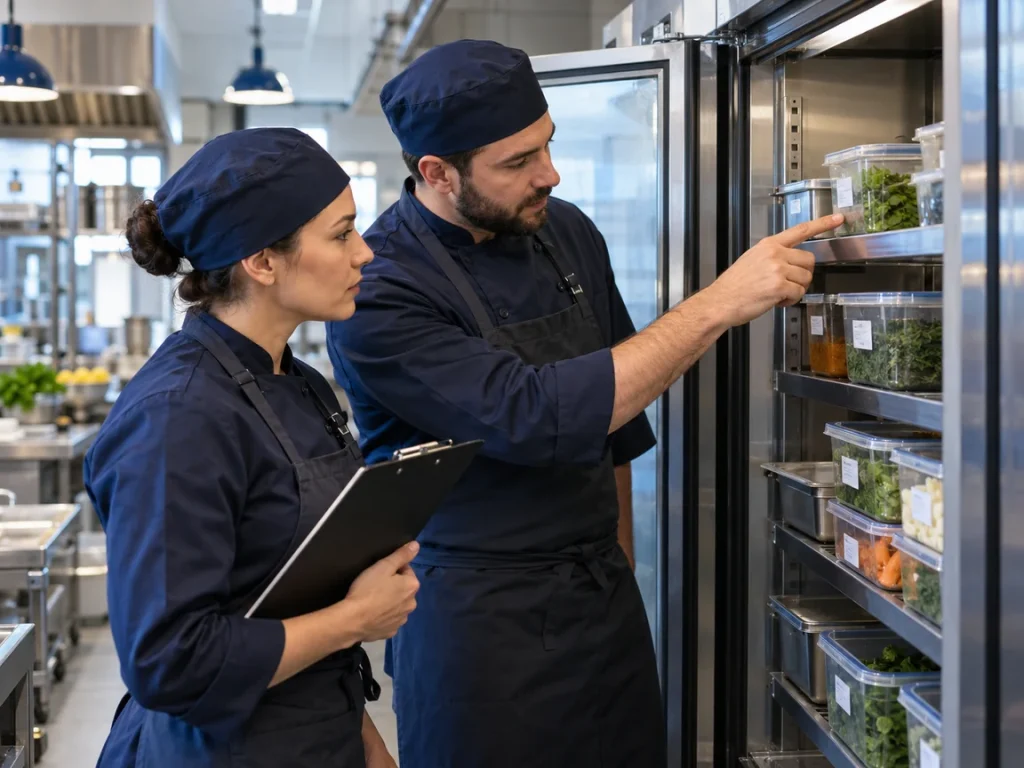
A food safety audit checklist helps a restaurant check whether its food-handling procedures are being followed and whether the records support what happens in the kitchen. It should connect each check to an observable condition, a measurement or record, and a defined response when something is wrong.
A signed temperature log is one piece of evidence. The audit also needs to establish which food was checked, when, how it was measured, and what happened after a reading fell outside the approved limit.
This guide shows how to structure an internal audit, use a compact set of sample questions, and follow a finding through to verified correction. For the wider review of service, equipment, people and daily routines, use our restaurant audit checklist guide.
Start with the food and processes your restaurant actually handles
Before choosing questions, identify what happens on-site. A restaurant that cooks, cools and reheats food needs different checks from a café that receives finished products and serves them cold. Delivery, catering and off-site service can add further handovers to examine.
Write the scope at the top of the audit: location, date, shift, auditor, person in charge, processes observed and records sampled. Include the version of the operating procedure used as the assessment standard. This prevents two managers from applying different criteria to the same answer.
Choose an audit time that lets you observe the process. If cooling starts after lunch, an opening visit cannot establish how staff handle that step. Record it as not observed and arrange an appropriate follow-up; an empty kitchen is not evidence that a process passes.
Internal audits sit within broader restaurant operations management. They help managers examine performance between formal inspections, but they do not replace required monitoring or a regulator’s inspection.
A compact food safety audit checklist: six areas to examine
Use these questions to design your own audit. They are a sample, not a complete checklist. Add the criteria and evidence requirements from your menu, processes and approved procedures before using them to assess a location.
| Area | Example audit question | Evidence to examine |
|---|---|---|
| Receiving and storage | Can staff show how this delivery was accepted and where the goods were stored? | Selected delivery record, product identification, storage condition and any rejection or exception record |
| Staff hygiene and illness reporting | Can the team explain the reporting procedure, and do observed working practices match it? | Staff explanation, observed practice and access to the relevant procedure; avoid putting private medical details in a general audit |
| Separation and allergens | Does the handling of a selected order follow the restaurant’s contamination and allergen procedures? | Ingredient information, order communication, storage arrangement and observed preparation steps |
| Time and temperature | Do the readings for a selected food or batch demonstrate that the applicable limits were met? | Food identity, actual measurements, timestamps, instrument checks and response to deviations |
| Cleaning and sanitizing | Does the team follow the specified method, and can it show the required checks? | Observed work, product instructions, measurement or test record where required, and follow-up on failures |
| Corrective action | Can the manager show what happened to the affected food and how the process was corrected? | Food disposition, named responsibility, corrective work and evidence of verification |
A question such as “Is the kitchen safe?” is too broad to audit consistently. A more useful question identifies the process and the evidence: “For the selected cooled batch, are the recorded times and food temperatures available, and do they meet the approved procedure?”
Keep the answer and the evidence separate. “Pass” is the conclusion; the readings or observations explain how the auditor reached it. Where a question does not apply, record the reason instead of treating it as a pass.
Follow a sample through the kitchen, then compare the records
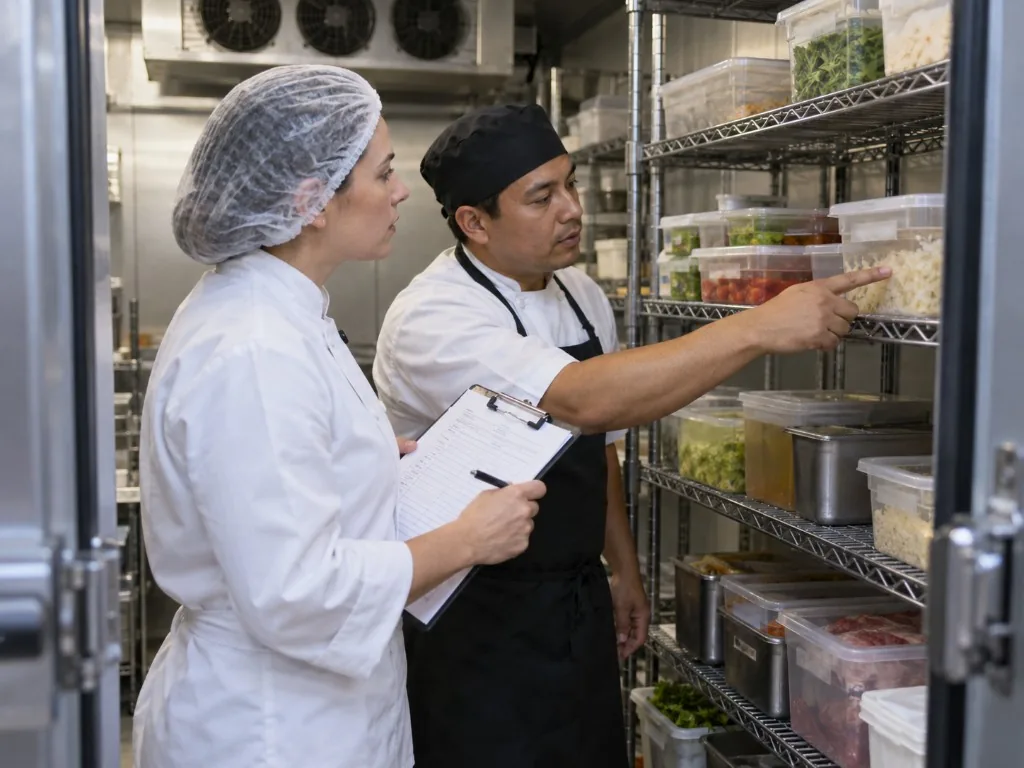
Pick a food, batch or order and follow its actual route through the relevant steps. For a cooked-and-cooled item, that might include preparation, cooking, cooling, storage and later use. For an allergen-related order, follow how the request moves from the customer to the kitchen and back to service.
This approach helps expose gaps between individually completed forms. A cooling log may look complete while the label on the stored container does not identify which entry belongs to it. A delivery may have a receiving record but no clear explanation for an exception.
Combine three types of evidence: observe the work, check the record, ask the person doing it. If they disagree, record the discrepancy and investigate it with the person in charge. Do not resolve the mismatch by choosing whichever answer makes the form complete.
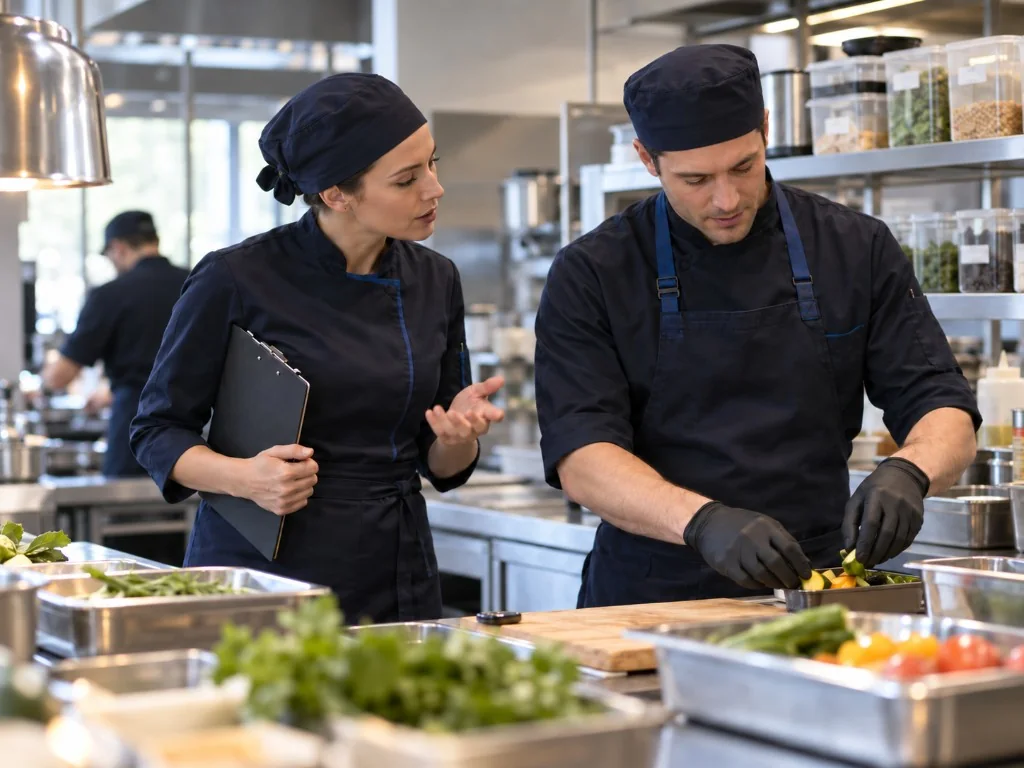
Make the sample traceable. “Checked refrigeration” leaves little for the next manager to investigate. “Checked the labelled container on shelf two in prep refrigerator A at 10:20 AM” identifies what was examined. Add the relevant product or batch reference and measurement where the procedure requires it.
A spot check also has a limit: it describes what was observed at that time. Avoid writing that the entire shift passed when you watched only one part of it. Extend the review when a finding suggests a wider problem, and record what was and was not covered.
Check temperature readings against the right rule
The FDA Food Code is a model offered for adoption by jurisdictions. The edition on FDA’s site is the 2026 Food Code; a location’s applicable rules depend on its authority, adopted provisions and approved processes.
The table below summarizes the general holding limits and conventional two-stage cooling rule for time/temperature control for safety (TCS) food—food requiring those controls to limit pathogen growth or toxin formation.
| Process | FDA model-code reference | What the audit record should identify |
|---|---|---|
| Cold holding | 41°F / 5°C or below | Food checked, time and measured temperature |
| Hot holding | 135°F / 57°C or above | Food checked, time and measured temperature |
| Cooling cooked TCS food: first stage | From 135°F / 57°C to 70°F / 21°C within 2 hours | Batch and readings showing the first-stage timing |
| Cooling cooked TCS food: complete process | From 135°F / 57°C to 41°F / 5°C or below within 6 hours total | The same batch’s readings and elapsed time from the start |
Source: FDA Food Code 2026, §§3-501.14–3-501.16, printed pages 70–72. The six-hour cooling period includes the first two hours. Exceptions and approved alternatives exist; these rows do not cover every food, cooling method, process or use of time as a public-health control. Local rules can differ.
Use the correct measurement for the question. A photograph of a refrigerator display shows the display reading; it does not establish the temperature of a particular food. Record the measurement method and use the appropriate instrument under the restaurant’s procedure.
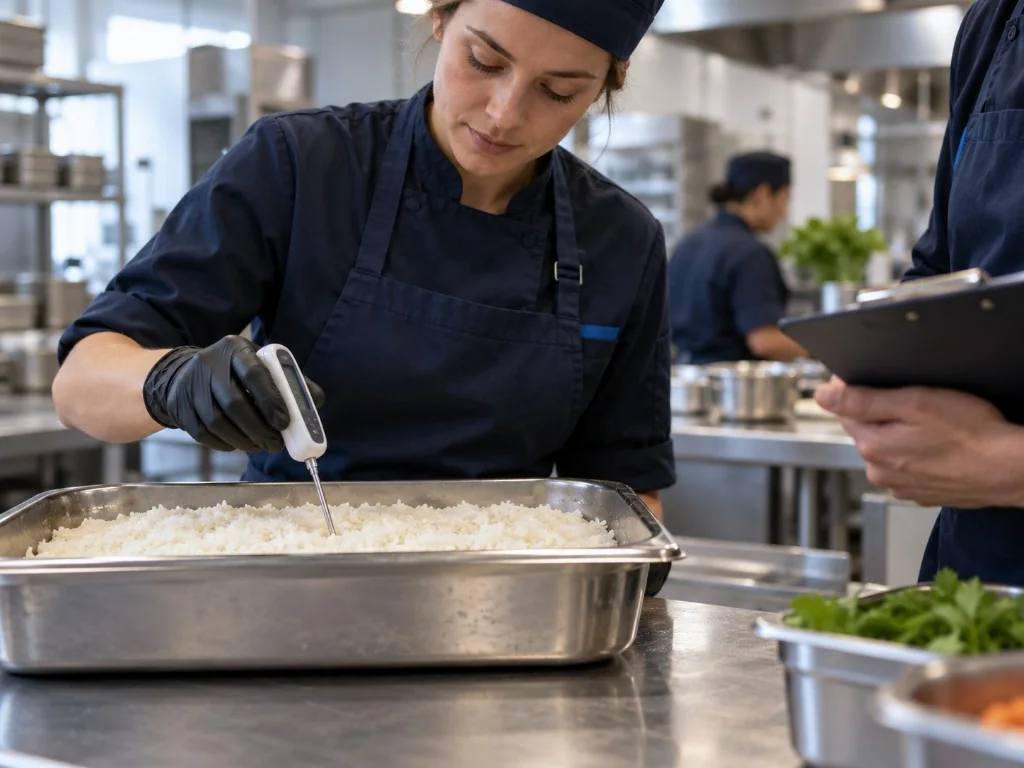
Cooking, reheating, receiving and date marking need their own applicable criteria. Do not copy a cold-holding limit into every temperature question or use one cooking temperature for the entire menu. Likewise, a photograph of a clean surface cannot establish sanitizer concentration or contact time.
Keep routine monitoring, verification and HACCP distinct
Monitoring is the scheduled observation or measurement of a control while the process operates. Verification checks whether the food-safety system is being followed and working as intended. Reviewing monitoring records and observing how staff perform a check can contribute to verification.
Validation is different again: it establishes the scientific and technical basis for the controls. A manager signing an audit form does not validate a cooking or cooling process. These distinctions are described in the HACCP Principles and Application Guidelines published by FDA.
For example, a team member records the checks required by the cooling procedure during production. Later, an auditor samples those records, checks their connection to the batch and examines any deviation. The audit supplements the operational controls; it cannot retrospectively supply a measurement that was never taken.
A generic “HACCP checklist” is not a site-specific HACCP plan. Critical control points come from hazard analysis. Hygiene and cleaning checks may support the food-safety system without each being a critical control point. Use the terminology from the operation’s approved plan rather than labelling every failed checkbox a CCP failure.
When a check fails, record two outcomes: food and process
Raise an urgent safety concern with the person in charge immediately and follow the approved response procedure. Completing the audit form must not delay necessary action.
The follow-up should make two outcomes clear: what happened to the affected food and what restored control of the process. A completed maintenance task answers only part of that question. Repairing a refrigerator does not, by itself, establish that food previously stored in it is safe.
Use the restaurant’s approved corrective-action procedure to document:
The finding: food or process affected, location, time, measurement or observation, and the applicable criterion.
The immediate response: who was notified and what action prevented affected food from being used or served while its status was assessed.
The food decision: the disposition required by the approved procedure, who made it and the supporting record.
The process correction: the specific work, responsible person and due time, such as equipment repair or a change to the working method.
Verification: who checked the correction, when, and what evidence justified closing the finding.
The FDA HACCP guidance treats corrective action as covering both the cause of a deviation and the disposition of affected product. Do not infer that food is safe because it has been returned to a cold refrigerator or because a later reading is acceptable.
Example: a refrigeration finding with an incomplete history
Suppose an auditor finds a food-temperature reading outside the location’s approved cold-holding limit. The earlier log is incomplete, so the duration is unclear. This is a fictional workflow example, not a food-disposition rule.
The auditor records the food, reading, time and equipment reference and alerts the person in charge. The team prevents use of the affected food while following its approved assessment and disposition procedure. It does not simply re-chill the food and mark the check as passed.
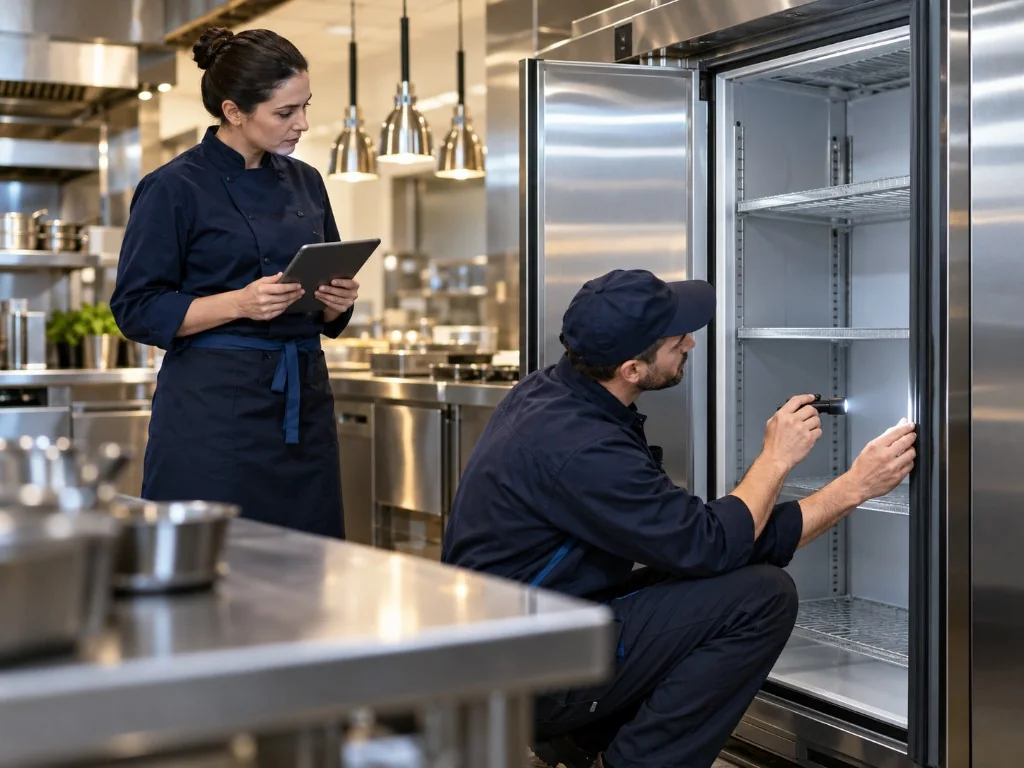
The equipment issue becomes a separate corrective task. Closure needs evidence of the food decision and evidence that the equipment or process is suitable for use again. If the cause was a missed monitoring check, the follow-up also needs to address that gap; a repair invoice alone will not do so.
Make the audit record useful to the next manager
A finding should remain understandable after the shift changes. Keep the original observation, supporting evidence, action history and closure decision together. If information was not recorded at the time, identify it as missing rather than reconstructing a reassuring entry later.
Separate a task marked “done” from a finding verified as resolved. The person completing the work can supply evidence; the designated reviewer checks it against the agreed closure requirement. Decide that requirement when assigning the action, so a store does not discover later that its evidence is insufficient.
Across locations, look for repeated findings by process and cause. Three cooling-record gaps might point to an unclear form, a handover problem or a procedure that does not match production. Treat those as questions to investigate, not conclusions from the count alone.
Schedule broader audits around the operation’s risks, changes and recurring findings. A menu change, new process or repeated deviation may justify an additional review. Required monitoring follows its own schedule; there is no single audit frequency that suits every restaurant.
Use software to keep findings and follow-up connected
A digital checklist is useful when it keeps the observation, responsible person and follow-up visible across shifts and locations. The criteria and food-safety decisions still need to come from your operation’s procedures and responsible people.
Bitreport’s audits and checklists connect findings with assigned corrective tasks and evidence. For this workflow, the practical question is whether the next manager can see what failed, who owns the action and what still needs review.
If you are comparing systems, our food safety audit software guide covers the inspection and corrective-action workflows to evaluate. Bring your current audit form and one recurring finding to a Bitreport demo to examine how your team could manage that follow-up.