

In 2026, the gap between retail brands that execute flawlessly at the shelf and those that do not will come down to one thing: what their field teams have in their hands. A mobile retail execution solution is no longer a nice to have upgrade. It is the operational backbone that determines whether your planograms hold, your promotions land, and your retail audits produce data you can actually use. If your field reps still switch between spreadsheets, camera rolls, and email threads, you are not just behind the curve. You are losing revenue at the shelf level every single day.
One of the clearest indicators of this shift is how companies approach retail audits today. Instead of relying on fragmented reporting and delayed insights, modern teams are turning to structured, mobile-first processes that standardize data collection and improve visibility. This is explored in more detail in this retail audit guide, which breaks down how digital audits are transforming in-store execution and helping brands act on real-time data rather than assumptions.
This post builds on that foundation by explaining why legacy field execution methods fail, what a modern mobile retail execution platform actually does, and the measurable ROI you can expect. As the retail audit process becomes increasingly digitized and integrated into daily workflows, 2026 marks the tipping point where adoption shifts from competitive advantage to a survival requirement.

The Retail Execution Crisis: Why Legacy Methods Are Failing in 2026
Retail execution has always been complex, but the demands of 2026 have exposed the limits of traditional field reporting methods. Brands that still rely on paper forms, spreadsheets, and email workflows are not just inefficient. They operate with blind spots that make accurate retail audits extremely difficult.
The cost of slow, disconnected field data
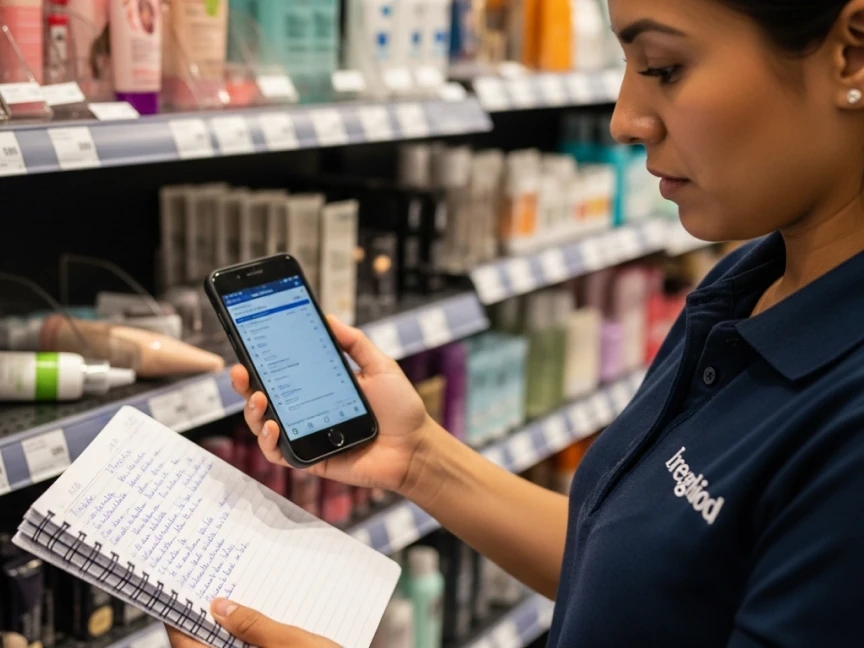
Field teams that use paper or spreadsheets lose an estimated 30–40% of productive time on administrative tasks. They spend less time on in store execution. Think about the scale. If 50 reps each spend two hours daily on data entry, photo management, and reports, that equals 100 lost hours every day. That time does not go to selling, building relationships, or fixing compliance issues. It goes to moving data.
The time loss is not even the worst part. Data collected offline or via email arrives too late. By the time headquarters sees a compliance issue, the promotional window may already be gone. A missing display, wrong price, or competitor takeover gets noticed too late. You are not analyzing current conditions. You are analyzing lost sales.

Why spreadsheets and email based reporting create blind spots
Spreadsheets and email chains create a hidden problem. They feel like proper data collection, but they produce inconsistent and unstructured data. That data is hard to analyze. Common issues include:
No standardization: Reps describe the same issue differently. One writes “display missing,” another writes “promo not set up,” and another sends a blurry photo without context. These inputs do not fit a clean audit system.
No verification: There is no GPS stamp, no reliable timestamp, and no proof that the visit happened as reported.
No real time visibility: Leadership depends on weekly or biweekly reports. These reports are already outdated.
No accountability trail: Teams flag issues, but follow ups often get lost in email threads.
These are not small issues. They are structural failures. They prevent consistent and reliable retail audits across stores. As explained in our broader retail audit guide, accurate audits need real time and structured data. Without it, your audit program cannot work properly.
The 2026 landscape: more SKUs, more stores, less margin for error
The retail landscape in 2026 makes these issues even worse. According to Capgemini’s retail trends research for 2026, retailers now manage faster product cycles, localized assortments, and omnichannel fulfillment. All of this requires faster and more detailed execution data.
When you manage hundreds or thousands of SKUs across many store formats, complexity grows fast. Each region may have different planograms and promotions. Errors increase quickly. The margin for error is now extremely small, and your tools must match that reality.
What a Mobile Retail Execution Solution Actually Does (And What to Look For)
There is a clear difference between a basic forms app and a purpose built mobile retail execution platform. This difference matters. The wrong tool will only digitize your existing problems instead of solving them.
Core capabilities: digital checklists, photo capture, GPS verification, and real time dashboards
A true mobile retail app for store execution combines key features into one field optimized platform:
Structured task management: Digital checklists and audit forms guide reps through each visit. Data stays consistent and comparable.
Photo based evidence collection: Photos provide clear proof of shelf conditions, pricing, and compliance. Each photo includes GPS and timestamps, creating reliable audit records.
Location intelligence: GPS confirms that reps are at the correct store. Geofencing can trigger location specific tasks automatically.
Real time data syncing and dashboards: Once a visit is complete, data appears instantly in dashboards. Managers can act immediately.
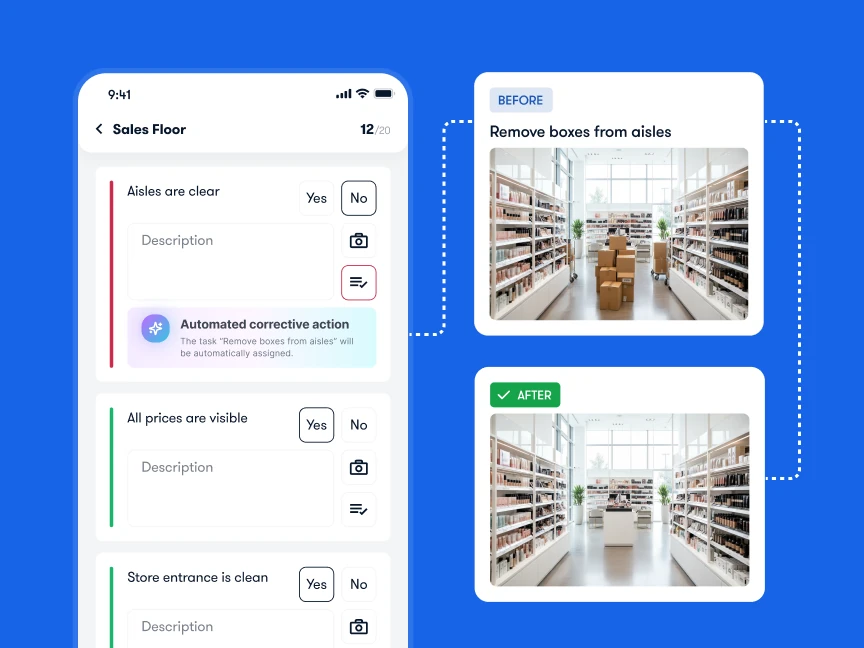
Automated alerts and corrective action workflows: When issues appear, the system notifies the right people and starts a corrective action workflow.

Ready to see what a modern mobile retail execution platform looks like in action?
How mobile solutions integrate with your existing retail audit workflows
A mobile retail execution solution should not work in isolation. It should act as the execution layer that feeds your audit system. The best platforms create structured and consistent data for your entire audit program.
This means the solution should replace or integrate with your current workflows. It should not add complexity. If you already use retail audit software, your mobile tool should connect directly to it. Ideally, both functions exist in one platform.
For brands managing multiple stores, this integration is critical. You need to compare performance, identify patterns, and benchmark results. This requires consistent data from one source.
Key differentiators to evaluate: offline functionality, configurability, and speed of deployment
Not all mobile retail execution solutions perform equally. Three factors separate strong tools from weak ones:
Offline first architecture: Reps often work in locations with poor connectivity. The solution must work without internet and sync later. Otherwise, it will fail when needed most.
Configurability without developers: Teams must adjust checklists and workflows quickly. If every change requires developers, the tool slows you down.
Speed of deployment: Modern SaaS tools should launch in days or weeks, not months. Faster deployment means faster ROI.

The ROI of Going Mobile: Measurable Business Impact
The business case for a mobile retail execution solution is clear. It delivers measurable improvements across field operations.
Faster issue resolution and reduced out of stock rates
Real time alerts help teams fix issues within hours instead of days. This directly protects revenue. For example, a brand may detect a drop in display compliance across a region within 24 hours. Photo verification and scoring reveal the issue quickly. Managers can act before peak sales days.
Without real time data, the same issue might appear in a weekly report. By then, the opportunity is already lost.
Increased field team productivity and visit coverage
Field reps using mobile tools can complete 20–30% more visits per week. They no longer waste time on manual reporting. Saved time converts directly into more store visits.
Quality also improves. Reps focus more on execution and relationships. They can verify that previous issues are resolved.

Better data quality driving smarter retail audit outcomes
Standardized data improves audit accuracy. Each visit produces structured and comparable data. This leads to:
Meaningful audit scores: All stores follow the same evaluation criteria.
Clear trend analysis: Historical data reveals patterns and weak points.
Instant visibility: Dashboards replace delayed reports.
Why 2026 Is the Tipping Point for Adoption
Mobile retail execution tools have existed for years, but 2026 marks a real turning point. Adoption is becoming necessary, not optional.
AI and image recognition are making mobile solutions smarter
As highlighted in The 2026 State of Retail report, AI features are becoming standard. These include:
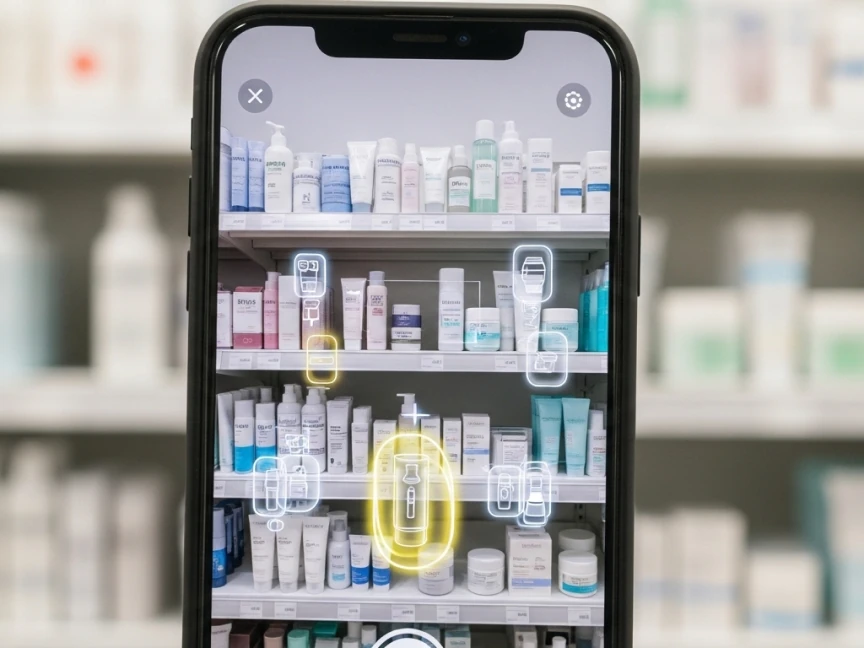
Automated shelf recognition that identifies products and detects issues from photos.
Anomaly detection that flags unusual patterns across stores.
Predictive analytics that forecasts potential problems.
These capabilities depend on structured data. Without it, AI cannot deliver value.
Retailer expectations are rising: compliance penalties and chargeback risks
Retailers are enforcing stricter compliance rules. They issue penalties for poor execution. Brands without real time monitoring risk financial losses.
A retail execution mobile app provides proof through photos and data. It helps prevent penalties and supports dispute cases.
The competitive pressure: your competitors are already mobile first
Early adopters already have years of structured data. They use it for predictions and benchmarking. Late adopters will struggle to catch up.
Modern SaaS tools like Bitreport make adoption easier. Deployment is fast, and pricing is scalable. The question is no longer about cost. It is about urgency.
Retail audit standards are shifting toward continuous monitoring. Without a mobile solution, brands cannot keep up with this direction.
Conclusion: The Time to Move Is Now
The shift to mobile retail execution is not a trend. It is a fundamental change. Legacy tools create delays, data gaps, and inconsistent audits. These issues reduce revenue and damage performance.
A purpose built mobile retail execution solution solves these problems. It delivers real time, structured, and reliable data. It turns audits into a continuous and proactive system.
2026 marks the end of early adoption. It marks the start of necessity. Brands that act now will lead. Others will spend years catching up.