

Walk into any thriving retail store-whether it’s a boutique fashion chain or a sprawling electronics outlet-and you’re witnessing the result of dozens of invisible decisions made before the doors even opened. The lighting, the product placement, the staff’s greeting, the stock on the shelves: none of it is accidental. Behind every seamless customer experience is a discipline that most shoppers never think about but that determines whether a business survives or fails.
That discipline is retail management. And if you’re running stores in 2025, understanding it isn’t optional-it’s existential.
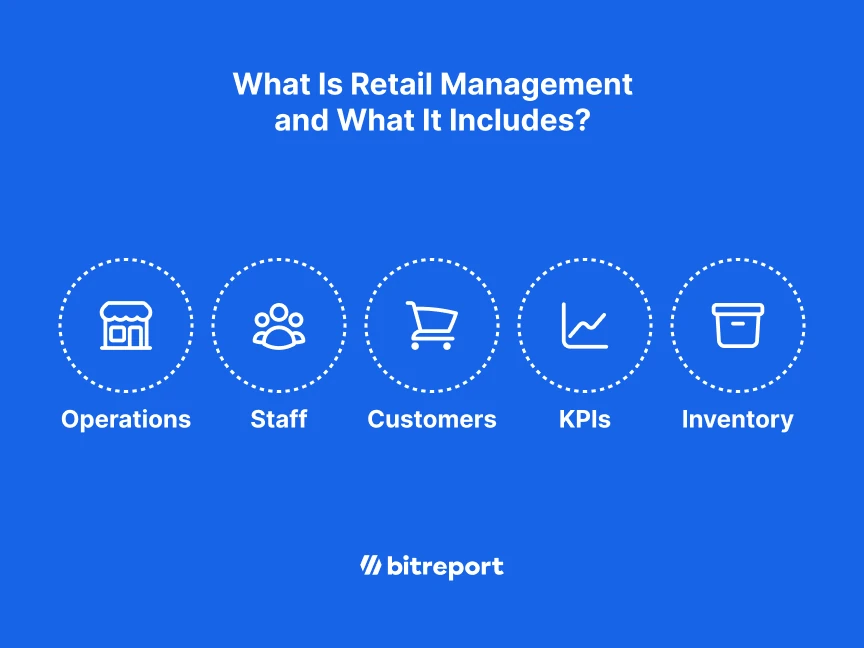
Retail Management Is More Than Just Running a Store
Let’s get something straight from the start: retail management is not “shopkeeping.” It’s not unlocking the doors in the morning, counting the register at night, and hoping customers show up in between. That’s retailing-the transactional act of selling goods to consumers.
Retail management is something fundamentally different. It’s the strategic oversight of every operation that makes a retail business function – from supply chain logistics and inventory control to customer experience design and financial performance analysis. Think of retailing as the what; retail management is the how and why.
This distinction matters because the industry has evolved. Modern retail management requires proficiency in data analytics, human resources, supply chain logistics, crisis management, and increasingly, technology integration. Dismissing it as an “entry-level skill” is a costly misconception that separates struggling stores from thriving ones.
Here’s why this matters more than ever: despite all the “retail apocalypse” headlines, physical stores still account for 83.7% of total US retail sales – approximately $5.28 trillion. In the first half of 2025 alone, brick-and-mortar added $66 billion in sales growth, outpacing e-commerce’s $29 billion. Physical retail isn’t dying-it’s evolving. And the retailers who understand management’s role in that evolution are the ones capturing that growth.
The Core Functions Every Retail Manager Must Master
Consistency across your operations relies on mastering a handful of core functions. Neglect one, and the others start to wobble. Let’s break down what separates competent managers from exceptional ones.

Inventory Management: Your Biggest Asset and Risk
Inventory is where your cash lives-or dies. The Pareto principle applies ruthlessly here: 20% of your products typically generate 80% of your revenue. Identifying and protecting that 20% while liquidating the rest is a core management duty.
The numbers are sobering. According to industry research, 58% of retail brands have inventory accuracy below 80%. That means more than half of retailers genuinely don’t know what they have in stock. The result? Stockouts on bestsellers, capital tied up in slow movers, and customers walking out empty-handed.
A useful benchmark: if a product hasn’t sold in 90-120 days, it’s no longer an asset-it’s a liability eating storage costs and tying up working capital that could be invested elsewhere.
Staff Management: Your Brand’s Human Face
Your team isn’t just ringing up transactions-they’re your brand ambassadors. Effective staff management encompasses hiring, training, scheduling, and performance tracking. In an era where product availability is commoditized (customers can find most products anywhere), your staff’s ability to create a memorable experience is often the only differentiator.
This is especially challenging at scale. When you’re managing 5 stores, you know everyone by name. At 50 stores, you’re relying on systems. Training programs need to be consistent, scheduling needs to match traffic patterns, and performance needs to be tracked objectively-not through occasional store visits and gut feelings.

Customer Experience: Consistency Builds Loyalty
The “experience economy” is real. With products available everywhere, the experience of buying them is what drives repeat business. This means visual merchandising, store atmosphere, service consistency, and increasingly, the seamless integration of online and offline touchpoints.
But here’s the catch: customer experience varies wildly between stores without standardized processes. A customer who has a great experience at your flagship location and a mediocre one at your suburban outlet will remember the mediocre one.
Consistency is the foundation of trust, and trust is the foundation of loyalty.
Financial Oversight: From Gut to Data
The days of managing by instinct are over. Modern retail management is metric-obsessed for good reason-the margins are too thin and the competition too fierce for guesswork. Tracking the right KPIs and making data-driven decisions about pricing, promotions, and stock allocation separates sustainable businesses from those bleeding cash without knowing why.
For a deeper dive into how these functions work in practice, explore our guide on real-life examples of retail operations management done right.

Why Retail Management Gets Harder as You Scale
Here’s the uncomfortable truth that every growing retailer eventually confronts: what worked for 3 stores will break at 15. The processes that felt manageable when you could visit every location weekly become impossible when your territory spans multiple cities or countries.
Visibility Gaps
The moment you can’t physically be everywhere, you lose sight of what’s actually happening. HQ sends instructions, but did the stores execute them? Did they execute them correctly? Did they execute them on time? Without systems in place, you don’t know until something goes wrong-and by then, the damage is done.
Communication Chaos
Manual tools like spreadsheets, WhatsApp groups, and email threads create communication silos. Instructions get lost in threads. Different stores interpret the same directive differently. Area managers spend their evenings copying data between systems instead of coaching their teams. Information flows become unreliable, and unreliable information leads to poor decisions.
Inconsistent Execution
Without standardized processes, every store develops its own way of doing things. One location follows opening procedures meticulously; another rushes through them. One store maintains perfect visual merchandising; another lets displays deteriorate. The customer experience becomes unpredictable, and unpredictable experiences don’t build loyalty.
This is the scaling paradox: the growth you worked so hard to achieve starts working against you when your systems can’t keep up. For strategies to tackle these challenges, see our breakdown of challenges in managing multi-location retail.
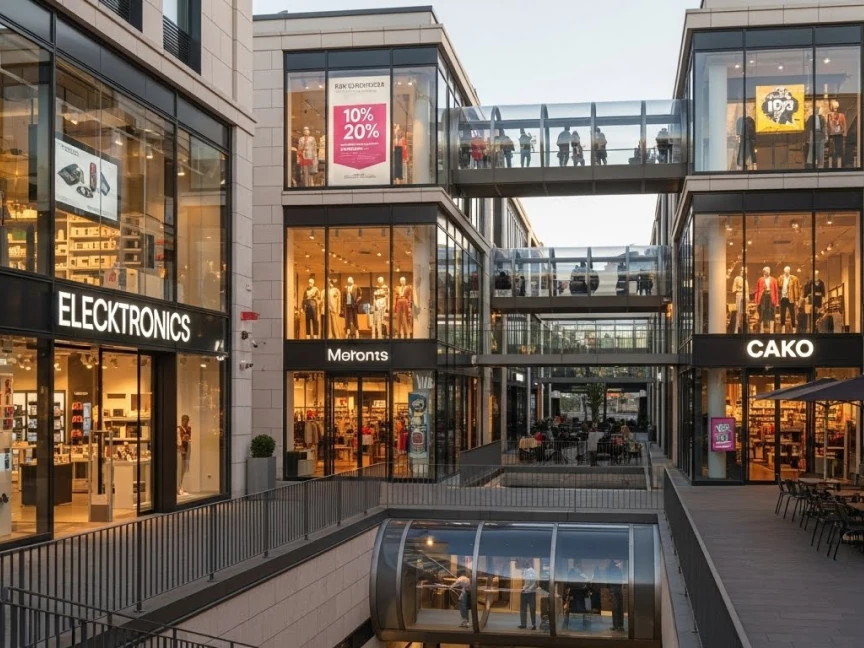
The Metrics That Separate Good Managers from Great Ones
If you can’t measure it, you can’t manage it. Here are the KPIs that modern retail managers live and die by.
Inventory Turnover Rate
This measures how many times you sell and replace your inventory over a period. The average retail benchmark is 11.32, though this varies significantly by sector. A high turnover rate generally indicates efficient inventory management and strong sales; a low rate suggests overstocking or weak demand.
Context matters: a luxury furniture store will have lower turnover than a fast-fashion retailer. The key is understanding your industry’s benchmarks and measuring your performance against them consistently.
Gross Margin Return on Investment (GMROI)
GMROI measures the profit you generate from your inventory investment. It answers a fundamental question: for every dollar you have tied up in stock, how much gross profit are you making? This metric helps you identify which product categories are actually earning their shelf space and which are just consuming capital.
Sales Per Square Foot
Physical space costs money. This metric tells you whether you’re using that space wisely. It’s particularly useful for comparing performance across locations and identifying underperforming stores that might need layout changes or product mix adjustments.
Sell-Through Rate
The percentage of inventory sold versus inventory received in a given period. A low sell-through rate signals problems-either you’re ordering too much, or the products aren’t resonating with customers. Either way, it’s an early warning sign that demands attention.
These metrics don’t just replace guesswork-they enable proactive management. Instead of reacting to problems after they’ve impacted your P&L, you can spot trends early and adjust before they become crises.
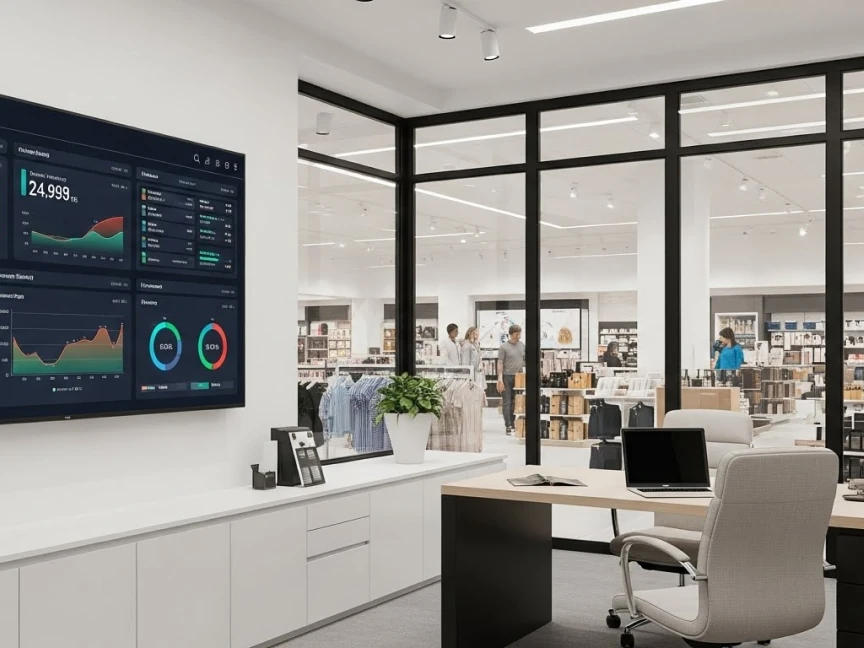
How Technology Is Reshaping Retail Management
Technology in retail isn’t about chasing shiny objects-it’s about achieving three things: visibility, consistency, and scalability. The right tech stack lets you see what’s happening across locations in real time, ensure processes are executed the same way everywhere, and grow your store count without linear growth in headcount or chaos.
The Modern Retail Tech Stack
Today’s retail operations typically integrate several systems:
POS Systems: The transaction layer, increasingly integrated with inventory, CRM, and analytics
Inventory Software: Real-time stock tracking, automated reordering, and demand forecasting
Task Management Platforms: Digital checklists, audit tools, and workflow automation that ensure consistent execution
Analytics Tools: Dashboards that turn raw data into actionable insights
The goal isn’t to have the most sophisticated technology-it’s to have the right technology that actually gets used. This is where many retailers stumble. They implement enterprise-grade systems that their teams find too complex, so adoption suffers, and the promised benefits never materialize.
Mobile-First Solutions
Frontline retail workers aren’t sitting at desks. They’re on the floor, in stockrooms, moving between locations. Effective retail technology meets them where they work-on mobile devices. Digital checklists, audit tools, and communication platforms that work seamlessly on smartphones see far higher adoption than those that require desktop access.

Common Retail Management Myths You Should Stop Believing
Misconceptions in retail management aren’t just academically wrong-they lead to real financial damage. Let’s dismantle the most persistent ones:
Retail is dying: Brick-and-mortar added $66 billion in sales growth in the first half of 2025 alone. Physical retail is evolving, not dying. The retailers who recognize this and invest in management excellence are capturing that growth.
More SKUs mean more sales: The “paradox of choice” is real. Stocking more variety often ties up cash in slow-moving inventory while confusing customers. Higher turnover of fewer, well-curated items is frequently more profitable than endless selection. Remember: 20% of products drive 80% of revenue.
Customer acquisition is everything: Retention is the financial driver. Acquiring a new customer costs significantly more than retaining an existing one through loyalty programs and consistent experience. Yet many retailers pour resources into acquisition while neglecting the customers they already have.
E-commerce will replace physical stores: The “Halo Effect” proves otherwise. Research consistently shows that opening physical stores actually boosts online traffic in surrounding regions. Physical and digital retail work symbiotically, not competitively. The future is omnichannel-not one channel dominating another.
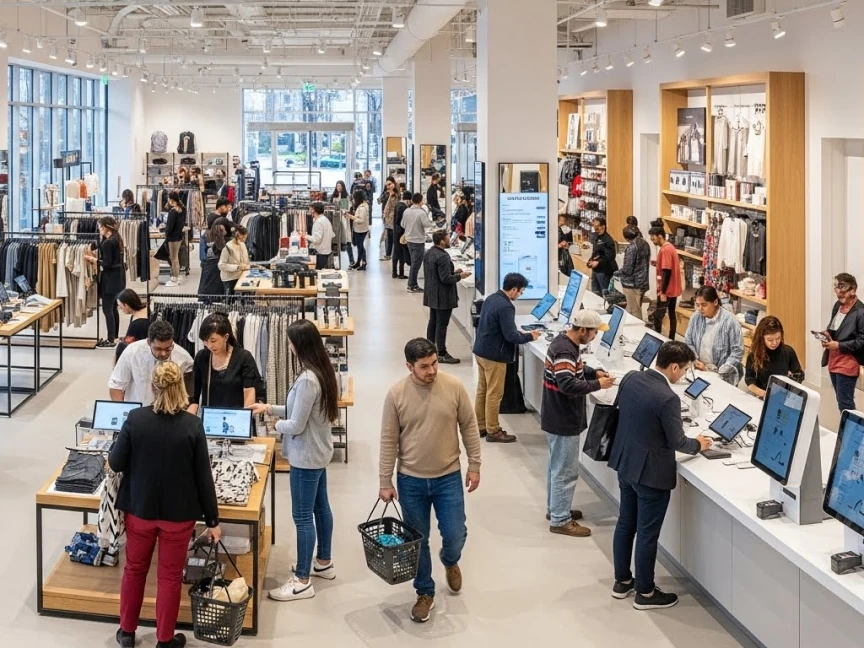
Conclusion: Building a Retail Operation That Runs Itself
Understanding retail management is one thing. Implementing it is another. Here’s how to turn these concepts into a functioning system.
Start with Visibility
You can’t manage what you can’t see. Can you tell, right now, whether yesterday’s promotional display was set up correctly across all locations? Do you know which stores completed their opening checklists on time? If the answer is “I’d have to make some calls” or “I’ll find out at the next site visit,” that’s a visibility gap that needs addressing.
Identify Manual Bottlenecks
Look at where your team is spending time on manual data transfer, report compilation, or chasing down information. Every hour spent copying numbers from one spreadsheet to another is an hour not spent coaching staff or improving customer experience. These bottlenecks are prime candidates for automation.
Standardize Workflows and Daily Routines
Consistency is the foundation of scalability. Document your opening and closing procedures. Create checklists for every shift. Ensure every store follows the same standards, so quality doesn’t depend on which manager happens to be on duty.
Invest in Tools That Simplify, Not Complicate
The best technology fades into the background. It should make work easier, not add another system to juggle. Look for solutions that are mobile-first (your teams are on the floor, not at desks), intuitive enough to require minimal training, and focused on execution rather than just reporting.
Focus on Empowering Your Team
The goal isn’t micromanagement-it’s enabling your people to do their jobs well. Give them clear expectations, the tools to meet them, and the autonomy to solve problems without constant oversight. Retail management should be about support, not surveillance.
When you get these pieces right, something remarkable happens: your operation starts running itself. Store managers handle their locations. Staff know what’s expected. Problems get flagged and resolved before they escalate. You shift from firefighting to strategic thinking.
That’s what modern retail management looks like. Not just running stores, but building the systems that let those stores run themselves to the standard your customers deserve.