
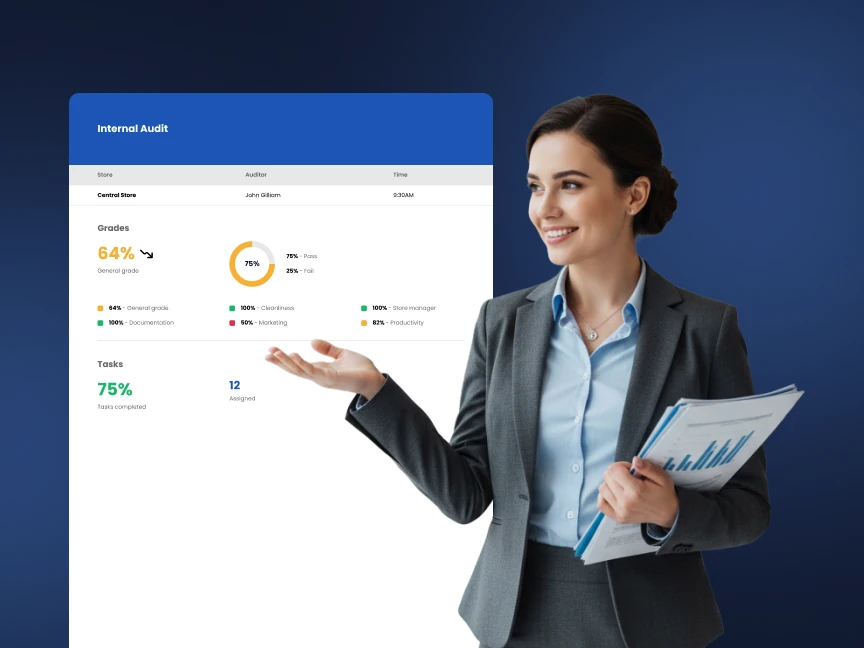
Have you ever wondered why a brilliant retail strategy created at headquarters often fails in stores? Despite months of planning – analyzing trends, designing displays, and planning promotions – customers still face misplaced signage, stock issues, and inconsistent messaging. This gap between strategy and execution remains a common retail problem. That’s where a robust store visit report becomes essential – and why aligning it with your retail audit strategy matters.

According to the 2026 State of Retail Study, success today depends on understanding real in-store behavior – how shoppers move, what grabs attention, and what drives purchases. To capture these insights and ensure consistency, field managers need a clear and structured way to evaluate stores.
Without standardization, managers rely on gut feeling, which leads to inconsistent experiences. A store visit report connects strategy with real store conditions. In this post, we’ll explain what it includes, why it matters, and how digital tools turn store visits into real performance drivers – not just paperwork.
What Is a Store Visit Report?
At its core, a store visit report is a structured document used by field managers to evaluate store conditions, monitor staff performance, and ensure compliance. It provides a clear snapshot of a store at a specific moment. Whether checking planograms, safety standards, or customer service, this report helps capture data quickly and accurately.

Defining the Store Visit Report
It is important to understand the difference between a routine store visit report and a full retail audit. While people often use the terms interchangeably, a field visit report is usually a frequent, local review. It supports the broader retail audit system.
Think of the master retail audit as a high-level strategic review done quarterly or bi-annually. It focuses on overall compliance and financial performance. In contrast, the store visit report is a regular, tactical check.
These reports ensure that standards set during the master audit stay consistent throughout the year. They help managers spot small issues before they grow into major problems. By documenting visits regularly, retailers create a continuous feedback loop. This allows store managers to act quickly and maintain high standards daily.
The Evolution from Paper to Digital
Historically, these evaluations were slow and fully manual. Field managers walked the aisles with bulky clipboards, filling out paper-based checklists and writing notes. Later, they had to manually enter everything into complex spreadsheets. This approach was not only time-consuming, but also prone to human error and data silos. By the time headquarters reviewed and analyzed the data, it was often already outdated. This made it difficult to take corrective action on time.
Today, the landscape has changed significantly. As highlighted in the US Store Openings and Closures 2025 Review and 2026 Outlook by Coresight Research, the physical retail footprint is constantly evolving. New store openings and strategic closures continue to reshape the market. To keep up with this pace, retailers are moving away from legacy systems and adopting modern SaaS solutions like Bitreport. These platforms enable real-time data capture, allowing field teams to enter observations, attach media, and sync data instantly with headquarters. This shift turns the traditional retail execution report into a dynamic, practical tool that delivers immediate business value.
Key Components of an Effective Store Visit Report
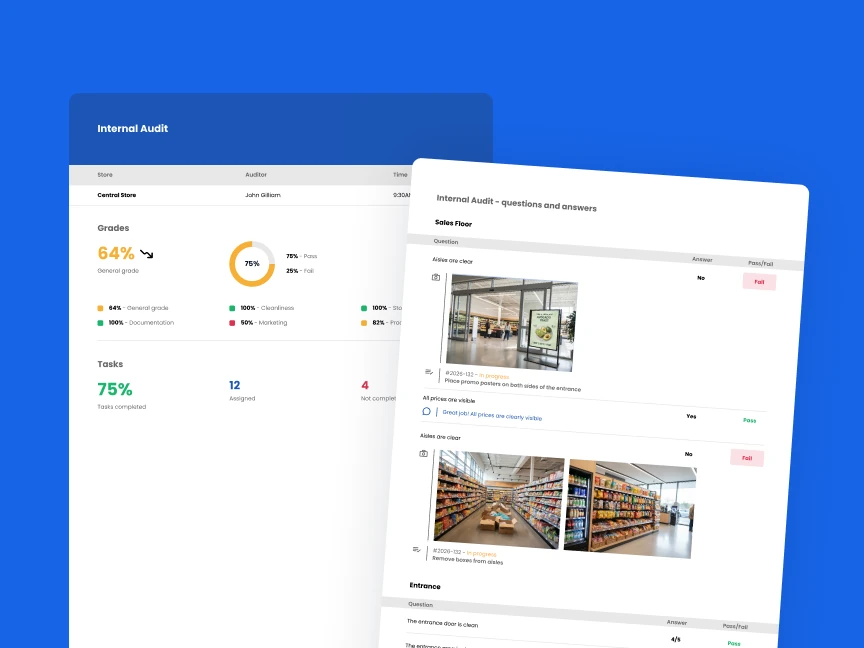
To drive operational excellence, a store visit report cannot be just a blank notepad for random thoughts. It needs to be a structured tool that captures clear and actionable data. When field teams use a well-designed store inspection checklist, they ensure that every location follows the same standards. This helps create a consistent brand experience across the entire retail network.

Standardized Evaluation Checklists
The foundation of any effective report is a standardized evaluation checklist. Without it, the assessment process becomes subjective. One district manager might focus on store cleanliness, while another focuses only on inventory levels. This inconsistency makes it difficult for corporate leadership to compare store performance or identify trends across locations.
A standardized checklist ensures that every store is evaluated using the same criteria. These checklists are usually divided into specific operational areas, such as:
Exterior and Windows: Assessing signage, window displays, and overall curb appeal.
Sales Floor: Checking aisle cleanliness, planogram compliance, and promotional displays.
Backroom and Inventory: Evaluating stockroom organization, safety protocols, and inventory accuracy.
Staff and Customer Service: Monitoring employee uniforms, greeting protocols, and product knowledge.
By removing subjectivity, standardized checklists provide a clear, quantifiable baseline for store performance. If you are building a checklist from scratch, follow this step-by-step guide to creating a store visit checklist.
Photographic and Media Evidence
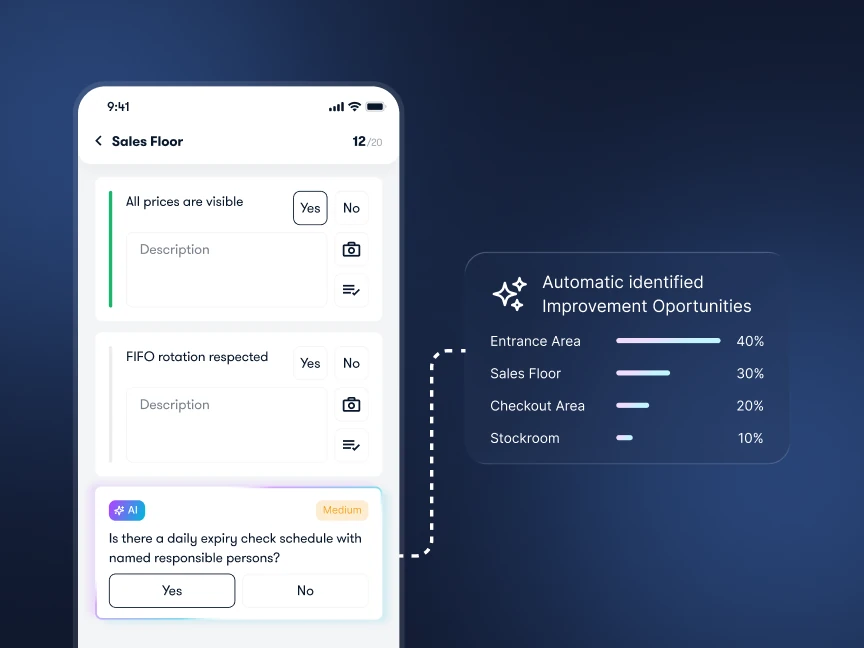
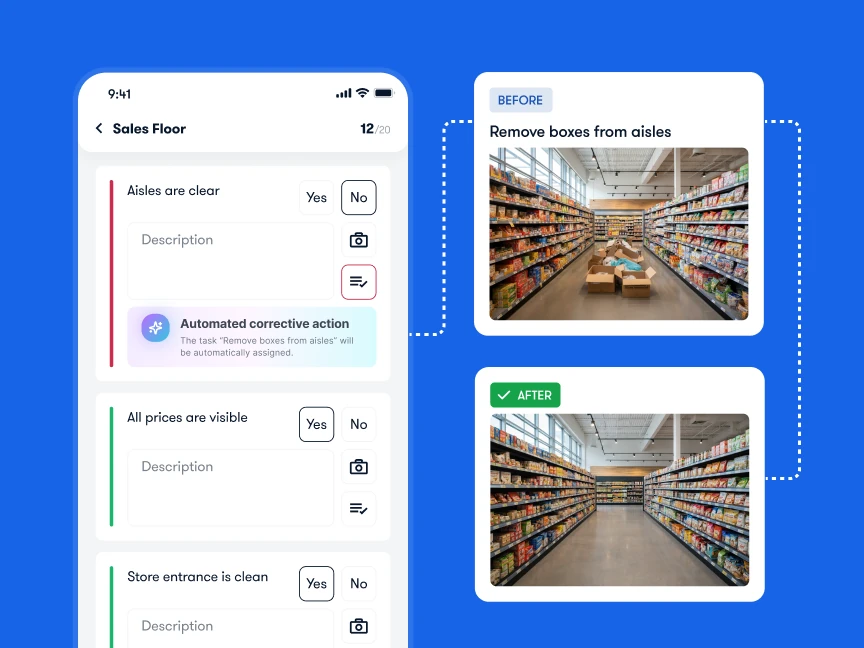
In retail compliance, seeing is believing. Text descriptions of a messy endcap or a poorly set promotional display often fail to show how serious the issue is. Capturing photos is essential for visual merchandising compliance and for proving that standards are met. Photos provide clear and reliable proof of store conditions. They also reduce unnecessary back-and-forth between field managers and store staff about what is happening on the shop floor.
Modern reporting tools make this process simple. For example, with a SaaS platform, a field manager can take a photo of a non-compliant display directly in the app, highlight the issue, and attach it to the relevant checklist item. To see how a digital store audit can integrate media capture and verify store conditions, explore audits and checklists. This helps teams document store reality clearly and accurately.
Automated Action Plans and Task Assignments
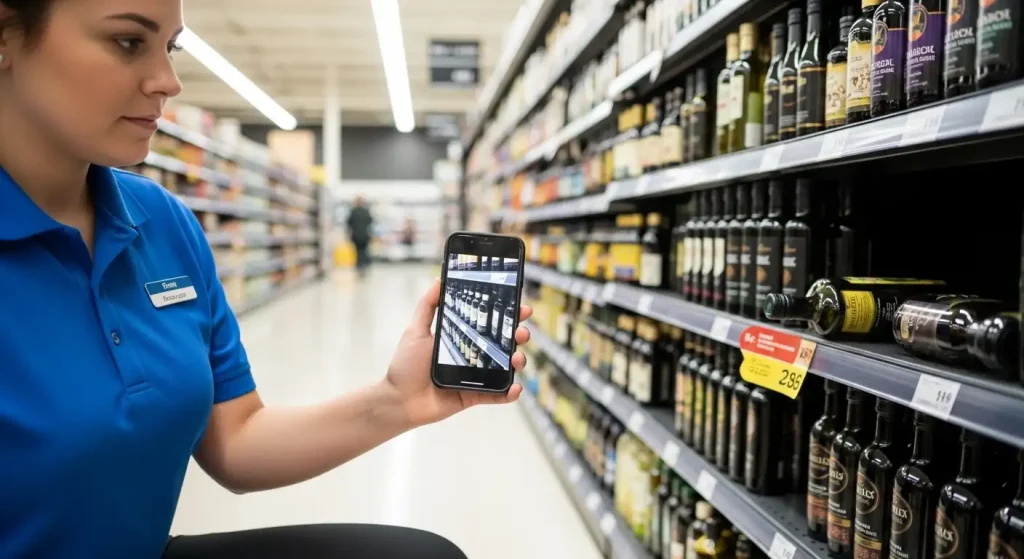
Identifying an issue is only half the job. The real value of a store visit report comes from fixing it. Traditional reporting often falls short because it does not include a clear follow-up process. A manager might note that a promotional sign is missing, but without a defined task, the issue can easily be forgotten during daily store operations.
Modern reports go a step further. They do not just identify problems – they trigger action. When a field manager marks an item as “non-compliant,” the system can automatically create a task, assign it to the responsible store manager, and set a deadline. This workflow helps close the loop and ensures accountability. By using an integrated system like audits and automatic corrective measures, retailers can track and resolve issues consistently, reducing the risk of repeated operational problems.
Turn every store visit report into action that drives real results.
Why Store Visit Reports Matter for Retail Audits
Understanding the tactical components of a report is important, but it is equally vital to recognize its strategic impact. A store visit report is not an isolated administrative task; it is the lifeblood of your overarching retail audit strategy. Consistent, high-quality reporting directly influences brand perception, employee engagement, and ultimately, the bottom line.
Ensuring Strict Brand Compliance
Brand consistency is one of the most powerful assets a retailer possesses. Customers expect the same level of service, the same product availability, and the same visual aesthetic whether they walk into a flagship store in New York or a suburban branch in Ohio. Store visit reports connect directly to the broader retail audit strategy by serving as the primary enforcement mechanism for this consistency.
Routine reports feed into macro-level compliance tracking. By continuously monitoring how well individual stores adhere to corporate guidelines, headquarters can ensure that promotional campaigns launch simultaneously, pricing is accurate, and visual merchandising standards are upheld. This strict brand compliance protects the company’s reputation and ensures that the customer experience remains unified across all touchpoints.

Boosting Overall Store Performance
Regular, documented visits do more than just enforce rules; they keep store staff accountable and motivated. When store teams know that their performance is being consistently measured and documented via a shop visit report, they are inherently more likely to maintain high standards. This accountability directly impacts sales and the customer experience.
Furthermore, the 2026 Store Operations & Experience Benchmark Survey by Retail TouchPoints reveals a growing enthusiasm for tools to support digital engagement and optimize store operations. When field managers use these digital reports to provide constructive, data-backed feedback, it transforms the visit from a punitive inspection into a collaborative coaching session. Managers can highlight areas of excellence, recognize top-performing employees, and provide targeted training to address specific weaknesses, thereby elevating the overall performance of the store team.
Enabling Data-Driven Decision Making
Perhaps the most significant advantage of standardizing your store visit reports is the wealth of data it generates. When a retailer relies on paper forms, the data is trapped in filing cabinets. However, when using digital reporting tools, every single checklist answer, photo, and corrective action is transformed into actionable analytics.
Aggregating data from hundreds of store visit reports allows headquarters to identify systemic issues, regional trends, and training gaps across the entire retail network. If data reveals that 40% of stores are failing the planogram compliance check for a specific product category, corporate can investigate whether the visual guidelines are too complex or if the supply chain is failing to deliver the necessary fixtures.
How to Optimize Your Retail Audit Report Process
Transitioning to a formalized reporting structure is a great first step, but to maximize efficiency and ROI, retailers must continuously optimize their processes. The goal is to make the reporting process as frictionless as possible for field teams, allowing them to spend less time staring at screens and more time coaching store associates.
Utilizing Mobile-First SaaS Tools
The most critical optimization step is adopting mobile-first technology. Field managers are constantly on the move, and their tools must keep up. Retailers should equip their teams with mobile applications that allow them to complete reports on smartphones or tablets directly on the shop floor.
Crucially, these tools must feature robust offline capabilities. Retail environments, particularly large big-box stores or basement-level stockrooms, often have notoriously poor Wi-Fi and cellular reception. Mobile-first platforms ensure that field teams can continue their evaluations, capture photos, and write notes without interruption, automatically syncing the data once a connection is re-established. This eliminates the administrative burden of having to re-enter data at a later time.
Streamlining Follow-Ups and Communication
A report is only as valuable as the actions it inspires. To truly optimize the process, retailers must move away from manual email chains and phone calls for issue resolution. Modern platforms automate the follow-up process entirely.
By utilizing advanced software, field managers can configure automated notifications and reminders for unresolved issues. If a store manager fails to fix a broken display within the 48-hour deadline, the system can automatically escalate the issue to the district manager. This streamlined communication ensures that nothing falls through the cracks. By centralizing all communication and task management within a single platform like Bitreport, retailers can maximize the ROI of every single store visit, turning raw observations into swift, measurable improvements.

Conclusion
Ultimately, a store visit report is much more than a simple checklist or a mundane administrative duty; it is a strategic asset that fuels your overarching retail operations. By moving away from subjective, paper-based methods and embracing structured, digital evaluations, retailers can gain unprecedented visibility into their field operations.
Standardizing evaluations ensures fairness and consistency, capturing visual proof eliminates ambiguity, and automating action plans guarantees that identified issues are swiftly resolved. When integrated properly, a robust retail execution report empowers both field managers and store staff to collaborate more effectively, driving higher compliance, better customer experiences, and increased profitability. To ensure flawless execution across all your locations and transform your operational data into a competitive advantage, it is time to digitize and optimize your store visit reporting process today.