

Even the most carefully crafted retail strategies can fall apart at the store level without proper execution and oversight. You can spend months developing the perfect visual merchandising guidelines, training programs, and standard operating procedures, but if they aren’t implemented correctly on the shop floor, your brand reputation and bottom line will suffer. This is where a comprehensive retail audit checklist becomes your most valuable operational tool.
A retail audit is essentially a health check for your stores, ensuring that every location adheres to the high standards set by corporate headquarters. However, an audit is only as effective as the criteria it measures. Without a structured, standardized framework, store visits can easily devolve into subjective walkthroughs that miss critical operational flaws. Implementing a well-designed checklist guarantees that every evaluation is objective, actionable, and aligned with your overarching business goals.

Whether you manage a handful of boutique shops or a sprawling national network, mastering the retail audit process is essential. For a broader overview of how retail audits help improve store execution, operational consistency, and merchandising compliance across multiple locations, you can also explore our guide, Retail Audit: Complete Guide to Improving In-Store Performance. In this guide, we will explore why you need a standardized approach, the core components that make up a successful checklist, and a step-by-step methodology for building and digitizing your own store evaluation framework.
Why You Need a Standardized Checklist
A standardized retail audit checklist supports consistent store operations. It ensures every store is evaluated using the same criteria, which removes subjective bias from regional managers or field teams. When auditors rely on memory or unstructured notes, results quickly become inconsistent. One auditor might focus heavily on inventory levels. Another might concentrate on employee uniforms. A standardized checklist eliminates this inconsistency and creates a clear evaluation process across all stores.
Furthermore, a structured store audit checklist turns observations into measurable data. Instead of vague feedback like “the store looked messy,” managers receive clear metrics. For example, they might see a visual merchandising compliance score of 65%. This data-driven approach makes it easier to identify trends, detect recurring issues across regions, and allocate resources more effectively.
In addition, a clear checklist sets expectations for store managers. It gives them a practical guide for what they should prepare before an audit. Regular use of a standardized retail audit checklist also shortens onboarding time for new area managers. With a structured framework in place, they can quickly learn how to evaluate store performance.

Ensuring Consistency Across Locations
Brand consistency defines successful retail operations. Customers expect the same look, feel, and level of service whether they visit a store in New York or Los Angeles. A standardized retail compliance checklist helps maintain this consistency. By measuring every store against the same KPIs, retailers can deliver a consistent brand experience across all markets.
As a result, customers develop stronger trust and loyalty toward the brand. At the same time, marketing campaigns can be executed consistently across every location.
Identifying Operational Bottlenecks
A standardized checklist also enables meaningful comparisons between stores. If multiple stores within the same district consistently fail inventory management checks, the issue may not lie with individual managers. Instead, the problem could point to a regional supply chain issue.
This broader visibility helps headquarters teams identify root causes more quickly. For example, they may discover inefficient delivery schedules or limited backroom storage capacity. By identifying the real cause, companies can fix operational problems instead of repeatedly addressing symptoms.
Empowering Store Managers
Retail audits should not feel like punitive inspections. Instead, they should function as tools for continuous improvement. When store managers receive the retail audit checklist in advance, they understand exactly what auditors will evaluate.
As a result, managers can perform their own internal checks before official audits take place. They can fix small issues early and take ownership of their store’s performance. This approach transforms audits from “gotcha” inspections into collaborative improvement processes.
Core Components of an Effective Retail Audit Checklist
Building a robust retail audit requires breaking down the store environment into logical, manageable categories. While the specific questions will vary depending on your niche – a checklist for grocery stores will look different than one for fashion brands – the core categories remain universally applicable. An effective checklist covers the entire customer journey, from the moment they see the storefront to the point of purchase, while also addressing behind-the-scenes operational and safety standards.
The exterior assessment should evaluate signage, window cleanliness, and current promotional display compliance to ensure maximum curb appeal. Merchandising checks must verify planogram execution, stock levels on the floor, and proper price tagging to maximize sales opportunities. Staff compliance evaluates uniform standards, greeting protocols, and product knowledge, ensuring the customer experience matches brand values. Finally, safety and loss prevention sections are non-negotiable, covering fire exit clearances, hazard checks, and security protocol adherence to protect both employees and assets.

Store Exterior and Window Displays
The exterior of your store is your first impression; it dictates whether a passerby becomes a customer. This section of the checklist should evaluate the cleanliness of the sidewalks, windows, and entryways. Auditors must check that exterior signage is fully illuminated and free of damage. Window displays must accurately reflect current marketing campaigns and adhere strictly to visual merchandising directives. A failure here means lost foot traffic before the customer even crosses the threshold, making it a critical, high-weight category.
Merchandising Audit Checklist Components
Once inside, the focus shifts to product presentation and availability. A dedicated merchandising audit checklist section is vital for maximizing revenue. Auditors need to verify that floor plans and planograms are executed flawlessly. Are high-margin items placed at eye level? Is the promotional signage accurate, current, and properly aligned with the products? Furthermore, inventory management checks must confirm that shelves are fully stocked, out-of-stock items are properly labeled or removed, and that pricing tags are 100% accurate to prevent customer frustration at the register.
Staff Compliance and Customer Service
Your employees are the face of your brand. This section evaluates the human element of the retail experience. Auditors should observe whether staff members are adhering to the dress code and wearing their name tags. More importantly, it measures behavioral compliance: Are employees greeting customers within a specified timeframe? Are they demonstrating adequate product knowledge when asked questions? Do they actively offer assistance or upsell at the point of sale? Documenting these interactions highlights training gaps that need immediate addressing.
Health, Safety, and Loss Prevention
Operational excellence means nothing if a store is unsafe or hemorrhaging inventory. The health and safety portion of the checklist is non-negotiable. Auditors must verify that fire exits are completely unobstructed, fire extinguishers are fully charged and inspected, and that floors are free of tripping hazards. On the loss prevention side, the audit should confirm that high-theft items are properly secured, security cameras are functioning, and that staff are adhering to cash-handling protocols and back-office security measures.

Step-by-Step Guide to Building Your Retail Inspection Template
Creating an effective retail inspection template is not a one-time task; it is an ongoing process of refinement and optimization. A checklist that is too brief will miss critical operational flaws, while one that is too bloated will exhaust your area managers and lead to pencil-whipping – where auditors simply check boxes without actually verifying the information. Striking the right balance requires a strategic, phased approach.
Start by aligning the checklist with your current business goals, whether that is improving customer service scores or ensuring visual merchandising compliance. Gather input from operations, marketing, and HR to ensure all critical aspects of the store environment are covered without creating unnecessary bloat. Use a scoring system that weights high-priority items heavier than minor details, ensuring critical failures immediately flag the attention of regional directors. Finally, run a pilot program in a small cluster of stores to identify confusing questions or missing elements before rolling the checklist out company-wide.

Define Your Core Objectives
Before writing a single question, you must define what a successful store looks like for your specific brand. Are you currently struggling with inventory shrinkage? If so, your checklist should lean heavily into loss prevention protocols. Are you launching a massive seasonal marketing campaign? Then visual merchandising compliance should be the primary focus. By anchoring your checklist to specific, measurable business objectives, you ensure that every question asked provides actionable data that drives the company forward.
Involve Cross-Functional Teams
A retail audit checklist built solely by the operations team will inevitably have blind spots. To create a comprehensive tool, you must involve stakeholders from across the organization. Marketing needs to weigh in on promotional displays; HR should contribute to staff compliance and training questions; and the safety/compliance department must dictate the loss prevention standards. Gathering this cross-functional input ensures that the final checklist serves the needs of the entire business, not just the field operations team.
Categorize and Weight Your Questions
Not all checklist items are created equal. A burned-out lightbulb in the stockroom is an issue, but a blocked emergency exit is a critical liability. To reflect this reality, categorize your questions logically (e.g., Exterior, Sales Floor, Backroom) and apply a weighted scoring system. High-priority items should carry a heavier point value or trigger an automatic failure if non-compliant. This weighting system ensures that the final audit score accurately reflects the true operational health and safety of the store.
Pilot Test and Refine
Never roll out a new retail audit checklist company-wide without testing it first. Select a diverse cluster of stores – varying in size, location, and historical performance – and have your area managers conduct pilot audits. Gather their feedback on the process. Were certain questions ambiguous? Did the audit take too long to complete? Was there a scenario on the floor that the checklist failed to account for? Use this real-world feedback to refine and streamline the template before officially launching it.
Digital vs. Paper: Moving to Digital Solutions
While the methodology behind a retail audit checklist remains the same, the medium you use to execute it makes a monumental difference. Historically, retail audits were conducted on paper clipboards or cumbersome spreadsheets. Today, those outdated methods are actively holding retail brands back. Paper checklists are prone to loss, require redundant data entry, and delay the visibility of critical store issues to corporate teams.

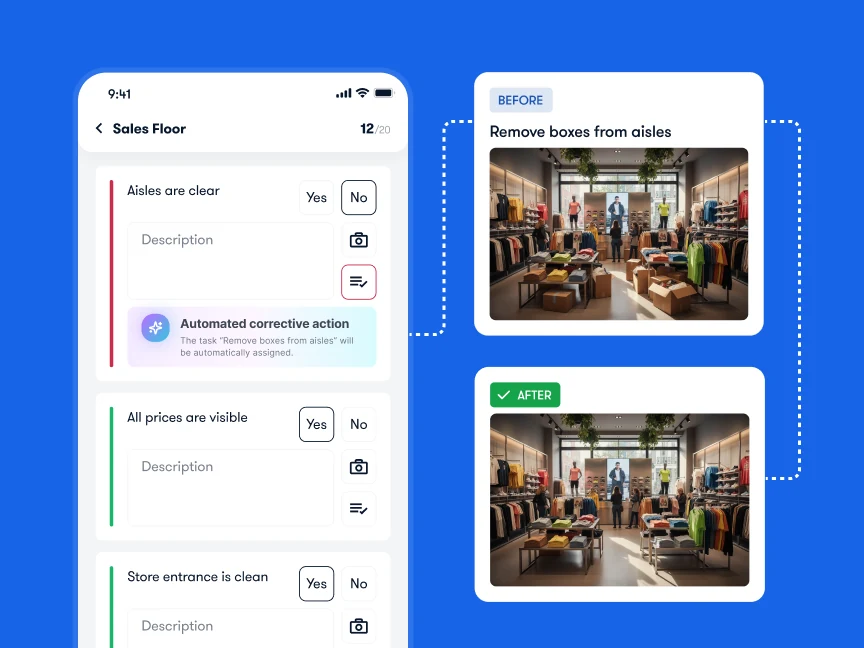
Adopting a modern digital solution allows auditors to attach photos, leave digital comments, and instantly upload scores to a centralized dashboard. This digital transformation turns a static checklist into a dynamic operational engine. If you are ready to modernize your approach, exploring dedicated software like Bitreport’s audits and checklists is the crucial next step. By integrating your checklist with a broader digital ecosystem, you can seamlessly connect your field evaluations to task management modules and trigger automatic corrective measures the moment an issue is logged.
Run smarter retail audits and keep every store on track.
The Limitations of Pen and Paper
Relying on pen and paper creates a massive administrative burden. Area managers spend hours transcribing handwritten notes into corporate spreadsheets, increasing the likelihood of data entry errors. Furthermore, paper forms cannot mandate photographic proof of compliance, making it difficult for corporate teams to verify the auditor’s findings. This lack of transparency and efficiency drains valuable time that could be spent actually coaching store teams.
Real-Time Data and Analytics
When you digitize your retail audit checklist, data flows in real-time. The moment an area manager hits “submit” on their tablet or smartphone, the results are instantly available on a corporate dashboard. Regional directors can immediately view compliance trends, track average scores across districts, and identify systemic issues without waiting for end-of-month reports. This real-time visibility enables agile decision-making and faster course corrections.
Automating Action Plans
The most significant advantage of digital audit solutions is the automation of follow-up tasks. In a paper-based system, a failed audit item requires manual follow-up via email or phone. Modern retail audit software can automatically generate and assign corrective action plans to store managers the moment a failed checklist item is submitted. Managers receive instant notifications, complete the required fix, and upload photo proof of the resolution, closing the loop on operational deficiencies immediately.
Conclusion
Creating an effective retail audit checklist is an ongoing process that requires clear objectives, comprehensive evaluation categories, and the right tools. It is not enough to simply list out operational standards; you must build a structured framework that provides actionable insights, ensures brand consistency, and empowers your frontline employees.

By moving away from subjective reviews and embracing standardized, data-driven audits, retail brands can guarantee a superior and consistent customer experience at every location. Transitioning from a static paper store evaluation form to a dynamic, digital platform accelerates this process, turning observational data into immediate corrective action. Ultimately, a well-executed retail audit checklist is the bridge between corporate strategy and flawless in-store execution.