
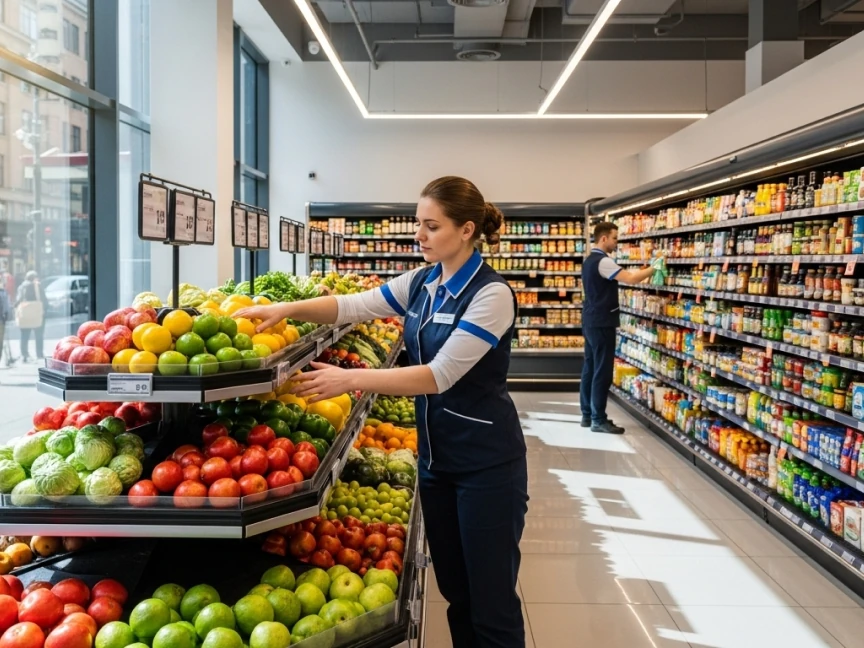
Grocery stores operate on razor-thin profit margins – just 1% to 3% on average. With such slim margins, every operational inefficiency directly impacts your bottom line. That’s why streamlining grocery store operations isn’t just important – it’s essential for staying competitive and profitable.
Read: The Complete Guide to Retail Operations
If tasks stay uncompleted, fresh vegetables rotten and shelves empty – soon enough you will feel it on your bottom line.
The good news? With the right strategy, your stores can run like clockwork. Let’s jump into 5 steps that can help you manage grocery store operations.
What Makes Up Grocery Store Operations
Running a successful grocery store involves managing many operations simultaneously. Most important ones include:
Stocking & shelving products: Ensuring shelves are fully stocked with properly rotated inventory to maximize sales and minimize waste.
Keeping cleanliness of the store: Maintaining hygiene standards and visual appeal that directly impact customer experience and regulatory compliance.
Managing customer service: Training staff to handle customer inquiries, complaints, and checkout processes efficiently during peak and off-peak hours.
Aligning price tags to current promotions: Keeping pricing accurate and promotional displays updated to avoid customer confusion and revenue loss.
Keeping promotional campaigns consistent across locations: Ensuring brand standards and marketing initiatives are executed consistently across all store locations.
Inventory management: Tracking stock levels, managing supplier relationships, and optimizing ordering to prevent stockouts and overstock situations.
Staff scheduling and training: Coordinating employee schedules, managing labor costs, and ensuring adequate coverage during busy periods.
Each of these areas requires constant attention, and when one falls behind, it creates a chain reaction that impacts your entire operation.
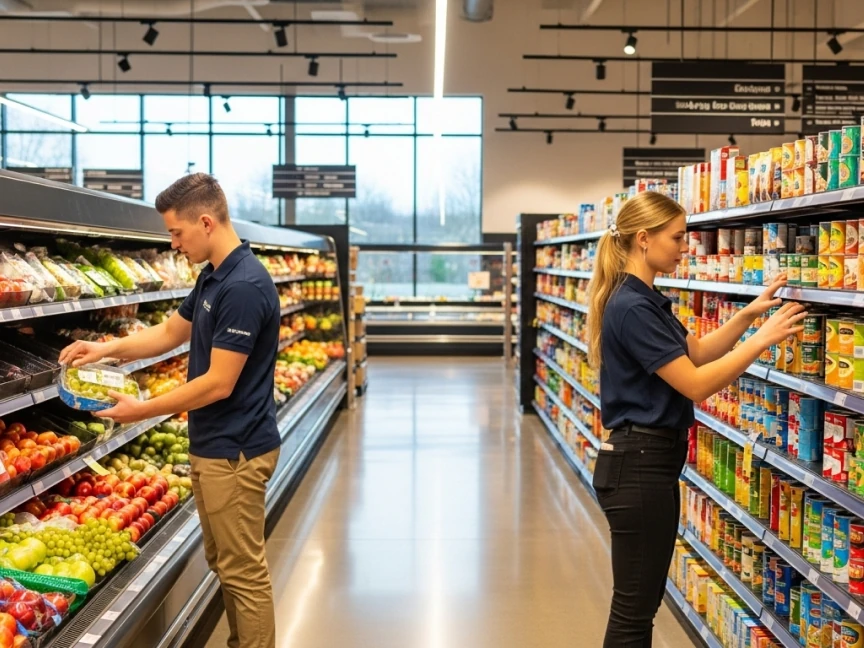
5 Strategies to Streamline Grocery Store Operations
1. Implement Digital Audits to Gain Real-Time Visibility
One of the main problems in the retail industry is the lack of visibility – and supermarkets are no exceptions. Managers come to a store once a month, assign tasks that need to be done… and then what. Sometimes it gets done, sometimes it gets lost in the noise. But that is not the way to good store operations.
Right now, many grocery chains are wasting valuable time on manual internal audits, from physically inspecting locations to writing lengthy reports. This outdated approach leaves too much room for tasks to slip through the cracks.
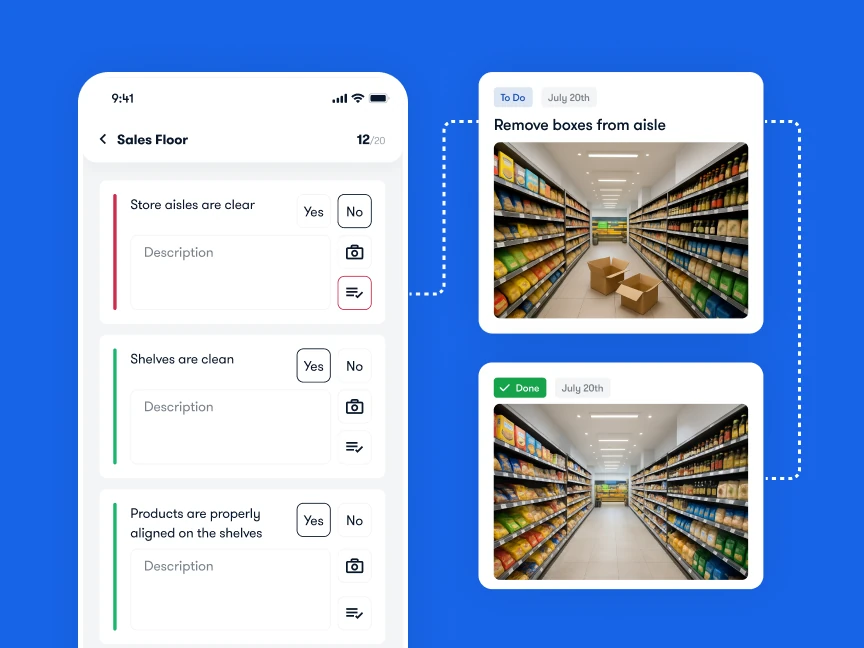
With digital audits you can expect:
Track and measure store execution: Monitor completion rates and quality standards across all locations in real time.
Instant visibility: Immediately spot non-compliant locations and identify recurring issues before they impact sales.
Save time while conducting audits: Reduce auditing time while improving accuracy and documentation.
Automated reporting: Generate reports automatically, freeing up time for strategic decisions.
Take control of your operations, before chaos takes control of you.
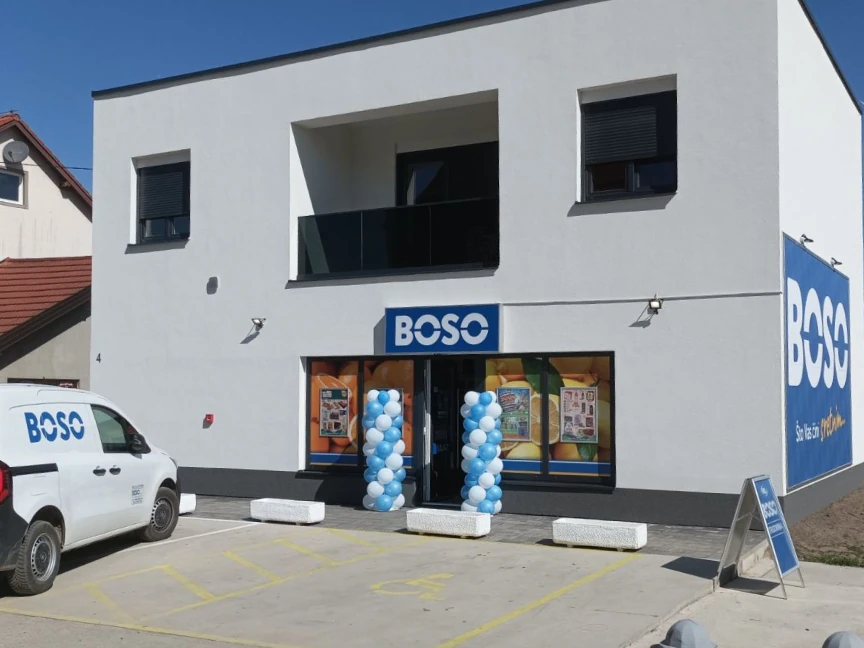
Take a major Croatian grocery retailer Boso, for example. Before implementing digital audits, Boso’s regional managers had no way of knowing what was happening in stores between monthly visits. It made maintaining standards across locations a struggle.
After integrating Bitreport’s digital audit solution, Boso standardized its checklists across locations giving HQ real-time visibility into task completion. Issues that previously took weeks to resolve were now addressed within days, dramatically reducing operational friction and boosting store performance.
🚀 Read the full case study: Boso Streamlines Store Operations and Boosts Consistency with Bitreport
Related Read: Retail Store Visit Checklist: Free Download + Pro Tips
2. Streamline Internal Communication
Here’s a statistic worth mentioning: 71% of retail staff say communication with headquarters or colleagues is their greatest workplace challenge. Despite this, over half of all manager-to-frontline worker communication still happens through email – a method that’s clearly not working for today’s mobile workforce.
Meanwhile, 76% of retail frontline workers say digital communication would increase their productivity and simplify their workload. Furthermore, 72% said they would feel more connected to headquarters if they could communicate through smartphones rather than email.
Imagine, that a store fails a food-safety check. The inspector takes photos, makes notes, and sends an email to the store manager. Days pass without action. There’s no follow-up, no accountability. By the next visit, the same issue persists, potentially leading to fines.
Now imagine the same scenario with a mobile-first communication platform. The inspection results are immediately uploaded with photos, assigned to the responsible team member, and tracked until completion. Management can monitor progress in real time, and the issue is resolved within hours rather than weeks.
3. Simplify Repetitive Processes
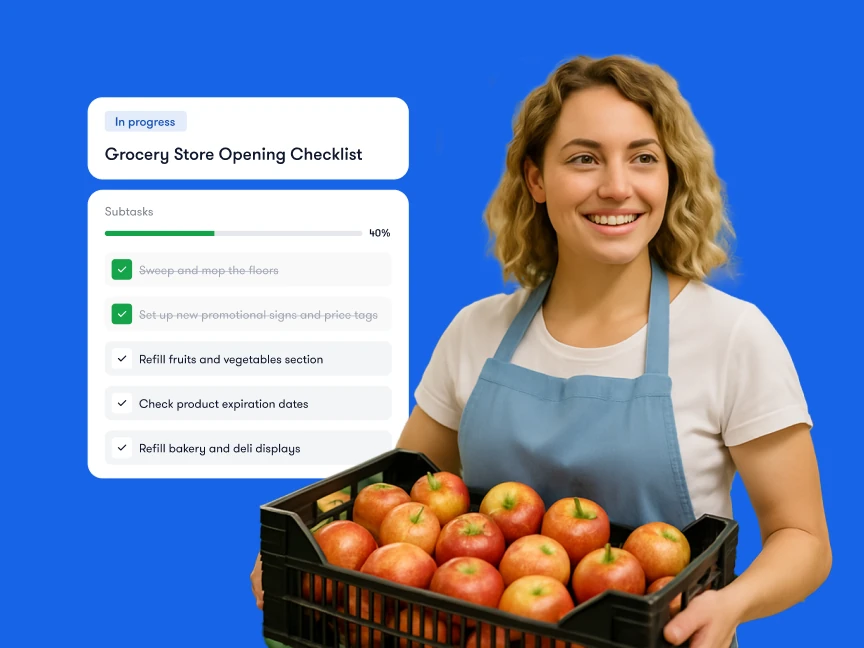
Standardized retail workflows, like opening and closing checklists, are often simplified to the point of being overlooked. However, these routines are actually the backbone of efficient grocery store operations. Without standardized workflows, everything becomes equally important, which means nothing is truly prioritized.
Picture that you’re opening a supermarket without clear direction. Yesterday’s shift manager mentioned checking the fresh section, arranging shelves, and opening the cash registers. But what comes first? Are there other critical tasks you’re missing?
Without a structured approach, you’re essentially guessing – and that uncertainty kills efficiency and revenue.
To solve these challenges grocery retailers should focus on task management.
Instant task verification: Confirm completion of critical tasks through photo documentation and digital signatures.
Repeating checklists: Automate recurring daily, weekly, and monthly tasks to ensure nothing is forgotten.
Quicker onboarding: New employees can follow standardized procedures immediately, reducing training time and errors.
Priority-based workflows: Clearly define which tasks must be completed first and which can be handled during slower periods.
4. Digitize Training Programs
Training plays a huge role in how smoothly a grocery store runs – but traditional methods like manuals or shadowing often lead to inconsistent results. When each location trains staff differently, execution varies, mistakes repeat, and productivity drops.
Digital training programs solve this by giving every employee the same clear, structured onboarding and ongoing education. With mobile-first training tools, staff access short lessons, videos, and step-by-step instructions directly on their phones – anytime, anywhere.
This leads to fewer mistakes, faster onboarding, consistent execution between locations, and continuous skill development. New hires quickly learn procedures for tasks like food safety, stocking, or promotion execution, while existing staff can refresh knowledge whenever needed.
Digitized training ensures your entire workforce operates confidently, consistently, and efficiently – which is essential for running high-performing grocery stores.
5. Standardize Price & Promotion Execution Across Locations
Promotion execution can make or break your sales quota. That’s why it’s necessary to always keep it in check. But, that is easier said than done – especially when managing multiple grocery stores.
Pricing errors create multiple problems:
Customer frustration, because advertised prices don’t match checkout totals
Lost revenue from incorrect markdowns
Compliance issues with promotional pricing regulations
Damaged brand reputation from inconsistent pricing

When done right promotion can:
Increase sales and foot traffic
Move inventory faster
Build long-term customer loyalty
Think about that grocery chain running a major holiday promotion. Without standardized execution, some stores might set up displays early, others might use outdated pricing, and a few might miss the promotion entirely. This inconsistency confuses customers and significantly reduces the campaign’s overall effectiveness.
With Bitreport, every promotion can be created as a structured task with a mandatory photo proof requirement. This ensures that store managers, the VM team, and the marketing department can verify that promotional materials are executed correctly and consistently across all locations.
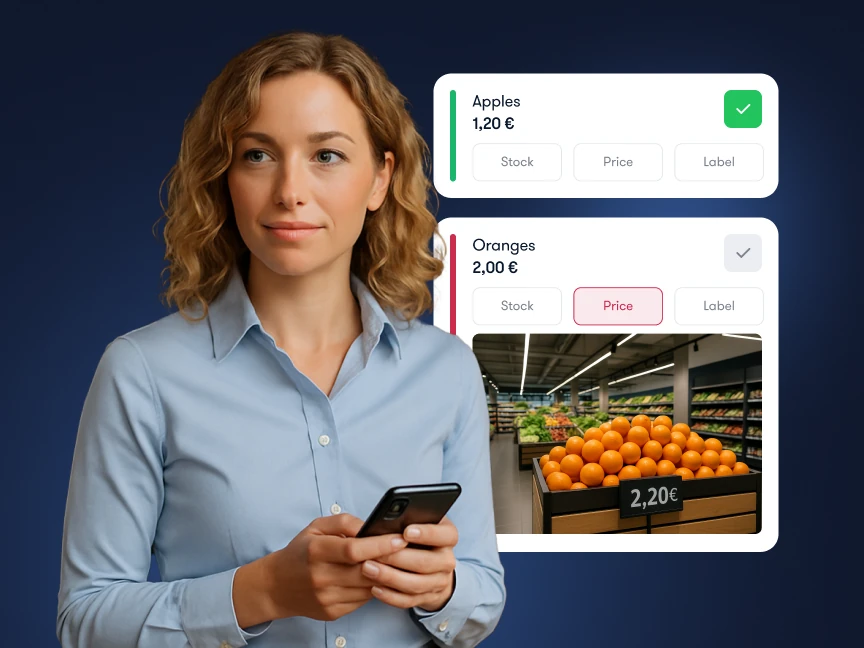
Additionally, through monthly internal audits and the digital price control tool, regional managers can easily confirm that all prices and promotional labels are accurate and compliant across every store – eliminating manual errors and ensuring complete execution consistency.
How Technology Can Streamline Grocery Store Operations
In industries such as retail, due to high competition and customer preferences, it’s important to always be adapting and moving forward. One of the more straightforward ways to do this is to leverage technology.
By investing in digital auditing tools, such as Bitreport, you can streamline your grocery store operations in no time. All the main hiccups – communication, time loss due to auditing and price inaccuracies can all be a thing of the past with one platform.