
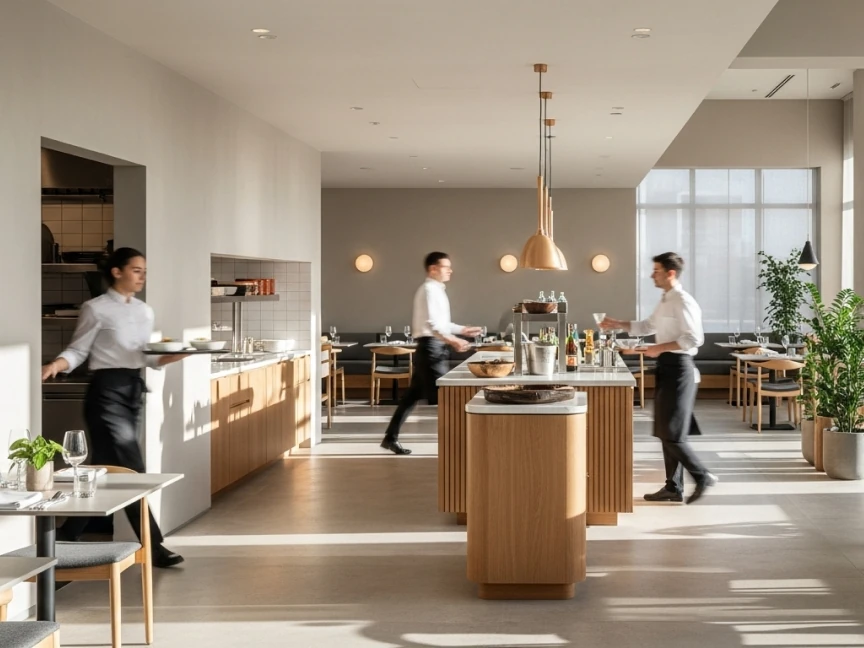
Every restaurant owner knows the frustration: despite working 70-hour weeks, profit margins stay razor-thin, staff turnover remains high, and customer complaints keep trickling in. The problem isn’t effort – it’s having the right operational framework. Learning how to improve restaurant operations isn’t about working harder; it’s about working smarter through systematic changes that compound over time.
The good news? Operational excellence isn’t reserved for large chains with deep pockets. Independent restaurants and growing multi-unit operators can achieve remarkable improvements by following a structured, phase-by-phase approach. This guide walks you through four essential phases designed to streamline restaurant operations and transform daily chaos into a system that practically runs itself. Whether you’re struggling with inconsistent food quality, high labor costs, or simply feeling overwhelmed, these proven strategies will help you regain control and build a more profitable business.

Phase 1: Conducting a Comprehensive Operations Audit
Before you can improve anything, you need to understand exactly where you stand. A thorough operations audit reveals the hidden inefficiencies that drain your profits and frustrate your team. This isn’t about finding someone to blame – it’s about gathering the intelligence you need to streamline restaurant operations effectively.
Start by walking through an entire service day as an observer, documenting every process from prep to cleanup. Resist the urge to jump in and help; your job during this phase is to watch, listen, and take notes. You’ll be surprised by what you notice when you step back from the daily grind. According to QSR Magazine’s 2026 priorities report, cross-brand communication and operational visibility are becoming critical success factors for restaurant operators.
Mapping Your Current Workflow from Open to Close
Create a detailed timeline of your restaurant’s daily operations. Document when each team member arrives, what tasks they complete, and how long each activity takes. Pay special attention to transition periods – the handoff between prep and service, shift changes, and the transition from lunch to dinner. These moments often harbor significant inefficiencies that go unnoticed during normal operations.
Your workflow map should include both front-of-house and back-of-house activities, noting where these workflows intersect and potentially conflict.
Identifying Bottlenecks and Pain Points
Interview front-of-house and back-of-house staff separately to understand their daily challenges. Ask open-ended questions like “What slows you down the most during service?” and “If you could change one thing about how we operate, what would it be?” Your team members experience operational friction daily – they know where the problems are.
Common audit findings include communication breakdowns between FOH and BOH, inconsistent portion control, scheduling inefficiencies, and equipment placement that creates unnecessary movement during peak hours.
Gathering Data: What Metrics Actually Matter
Track key metrics including table turnover time, ticket times, food waste percentages, and labor cost ratios. These numbers tell the story of your operational health. For a deeper dive into essential metrics, check out our restaurant operations management guide.
Table turnover time: How long from seating to payment?
Average ticket time: Kitchen efficiency from order to plate
Food cost percentage: Actual vs. theoretical food costs
Labor cost ratio: Labor expenses as a percentage of revenue
Waste percentage: Food discarded before and after service
Creating Your Baseline Performance Scorecard
Identify the top three operational issues costing you the most time, money, or customer satisfaction. Create a simple scorecard with current benchmarks so you can measure improvement over time. This scorecard becomes your roadmap for prioritizing improvements and tracking progress. Without baseline measurements, you’ll never know if your changes are actually working.

Phase 2: Streamline Restaurant Operations with Optimized Workflows
With your audit complete, it’s time to redesign how work actually gets done. This phase focuses on eliminating waste – wasted motion, wasted ingredients, wasted time – while improving consistency and quality. The goal is creating systems that produce predictable results regardless of who’s working.
As highlighted in PI Hospitality Academy’s 2026 trends report, restaurants that integrate technology with streamlined workflows are significantly outperforming those relying on traditional methods.
Redesigning Station Setup for Maximum Efficiency
Apply mise en place principles to every station, ensuring all tools and ingredients are within arm’s reach. Watch your cooks during service – every time they walk across the kitchen or search for a tool, that’s lost time and broken concentration. Design service stations to minimize unnecessary movement and cross-traffic during peak hours.
Consider these station optimization principles:
Place frequently used items at waist height
Arrange ingredients in order of use for each dish
Eliminate any item that isn’t used at least once per shift
Create clear pathways that prevent staff from crossing paths
Implementing Standardized Recipes and Portion Control
Create detailed recipe cards with exact measurements, photos, and plating guides for consistency. Every dish should look and taste the same regardless of who prepares it. This isn’t about stifling creativity – it’s about delivering on customer expectations every single time.
Portion control directly impacts your food costs. A half-ounce overportioning on a protein that’s served 100 times daily adds up to significant annual losses. Use scales, portioning tools, and visual guides to maintain consistency.
Optimizing the Order Flow: From POS to Plate
Establish clear communication protocols between servers and kitchen staff to reduce errors and delays. Consider kitchen display systems (KDS) to replace paper tickets and improve order accuracy. The path from order entry to plate delivery should be seamless and predictable.
Your restaurant opening checklist should include verification that all communication systems are functioning properly before service begins.
Reducing Food Waste Through Smart Inventory Practices
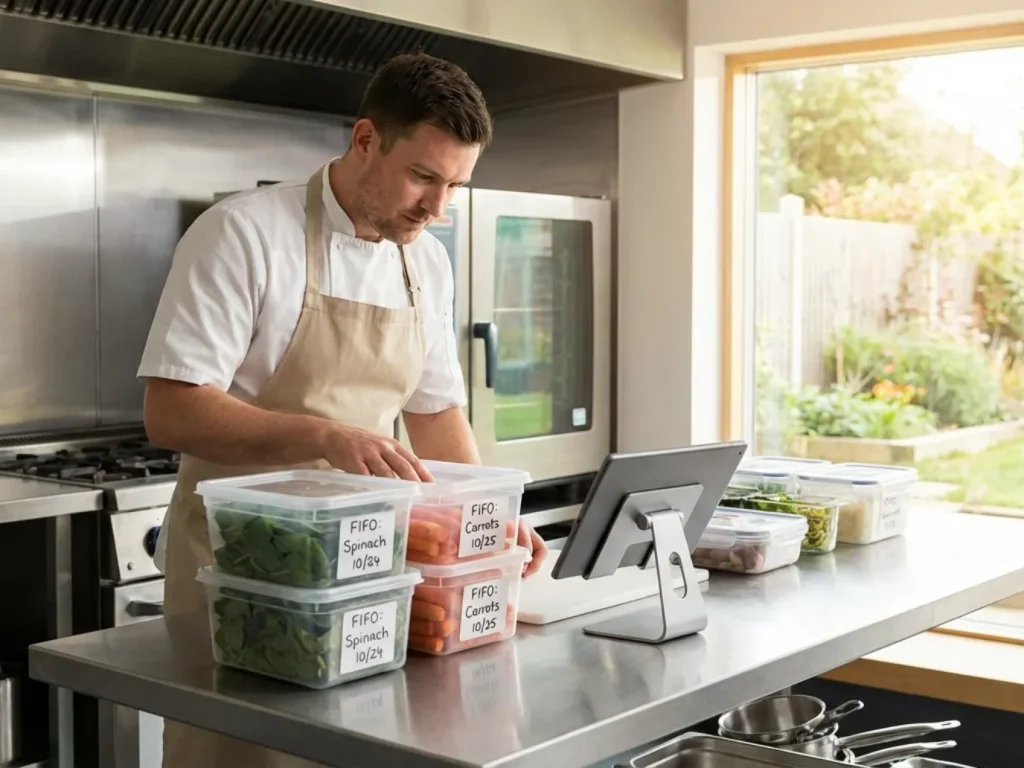
Implement a first-in-first-out (FIFO) inventory system to minimize spoilage and waste. Set up prep schedules based on historical sales data rather than guesswork. If you’re consistently over-prepping certain items, that’s money going directly into the trash.
Track waste by category to identify patterns:
Prep waste (over-production, trimming)
Line waste (mistakes, returns)
Spoilage (expired ingredients)
Plate waste (customer leftovers)
Phase 3: Building and Empowering High-Performance Teams
Even the best systems to streamline restaurant operations only work when people execute them consistently. This phase focuses on building a team culture where operational excellence becomes second nature. Your staff are the ones who bring your operational improvements to life every day.
According to Modern Restaurant Management’s 2026 outlook, labor challenges continue to be a top concern for operators, making team development and retention more critical than ever.
Creating Clear Role Definitions and Accountability
Document every position’s responsibilities, including opening and closing duties, in accessible checklists. When expectations are clear, accountability follows naturally. Every team member should know exactly what success looks like in their role.
Your role documentation should include:
Primary responsibilities and daily tasks
Quality standards and metrics
Communication protocols
Escalation procedures for problems
Cross-training requirements
Developing Effective Training Programs That Stick
Develop a structured onboarding program that combines shadowing, hands-on practice, and written materials. New hires should understand not just what to do, but why each procedure matters. When people understand the reasoning behind systems, they’re more likely to follow them consistently.
Cross-train employees across multiple positions to increase flexibility and reduce overtime costs. A server who can jump on the line during a rush or a cook who can help expedite creates operational resilience that pays dividends during unexpected situations.
Implementing Smart Scheduling Practices
Use historical sales data and local events to create predictive scheduling that matches staffing to demand. Over-staffing kills margins; under-staffing kills service quality and burns out your best employees. The sweet spot requires data-driven decision making.
Hold brief pre-shift meetings to communicate specials, 86’d items, and service goals. These five-minute huddles align your team and prevent miscommunication during service. They also create opportunities to recognize great work and address concerns before they become problems.
Establishing Feedback Loops and Performance Metrics
Create anonymous feedback channels so staff can report operational issues without fear. Some of your best improvement ideas will come from the people doing the work every day. Track individual and team performance metrics to identify coaching opportunities.
Recognize and reward employees who consistently follow procedures and suggest improvements. Positive reinforcement builds the culture of operational excellence you’re working toward. For comprehensive guidance on building these systems, explore our complete restaurant operations guide.
Phase 4: Leveraging Technology for Sustainable Improvement
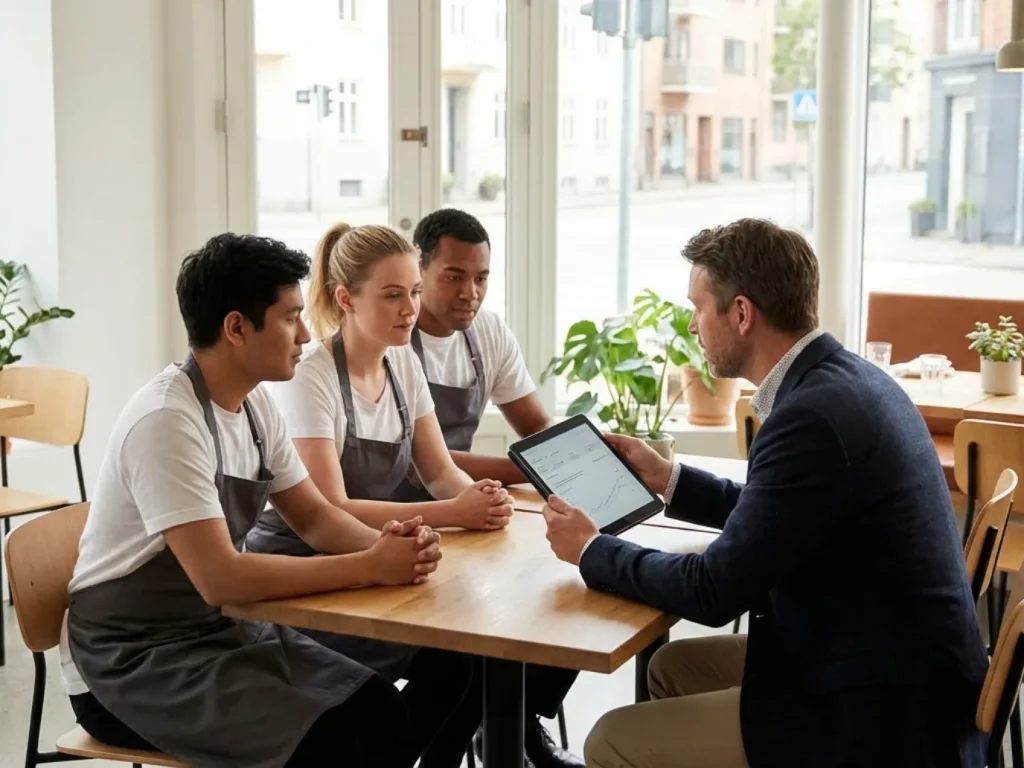
Technology should solve problems, not create new ones. The right tools can streamline restaurant operations by addressing the specific pain points you identified in your audit. The right technology amplifies your operational improvements and makes them sustainable long-term.
As noted by Bar & Restaurant News, 2026 brings significant regulatory changes that make technology-enabled compliance tracking increasingly important for restaurant operators.
Choosing the Right Restaurant Management Tools
Evaluate technology solutions based on your specific pain points identified in the audit phase. Don’t adopt technology because it’s trendy – adopt it because it solves a real problem you’ve documented. The best tools integrate seamlessly with your existing workflows rather than requiring you to change everything.
Key considerations when selecting tools:
Does it address a documented pain point?
How steep is the learning curve for staff?
Does it integrate with your existing systems?
What’s the true total cost of ownership?
How responsive is vendor support?
Automating Routine Tasks and Reporting
Implement automated inventory tracking to reduce manual counting and improve accuracy. Use scheduling software that accounts for labor laws, employee availability, and predicted demand. Set up automated daily, weekly, and monthly reports for key operational metrics.
By setting up automated workflows on day-to-day tasks, execution becomes a well-oiled machine that runs on its own once set up correctly. This frees your management team to focus on coaching, guest experience, and strategic improvements rather than chasing checklists.
Using Data Analytics to Drive Continuous Improvement
Use real-time dashboards to spot operational issues before they become major problems. When you can see that ticket times are creeping up during Tuesday dinner service, you can investigate and fix the root cause before it impacts customer satisfaction.
Schedule regular technology reviews to ensure tools are being used effectively and delivering ROI. Technology that sits unused is worse than no technology at all – it represents wasted investment and missed opportunities.
Integrating Systems to Streamline Restaurant Operations
Integrate your POS, inventory, and scheduling systems to eliminate data silos. When information flows freely between systems, you gain visibility that was previously impossible. A sale automatically adjusts inventory levels, which triggers reorder alerts, which informs prep schedules.
Platforms like Bitreport help centralize operational checklists, audits, and compliance tracking across locations. This unified approach ensures consistency whether you’re running one location or fifty, and provides the documentation you need for regulatory compliance and continuous improvement.

Conclusion
Improving restaurant operations is not a one-time project – it’s an ongoing commitment to systematic excellence. By conducting thorough audits, investing in your team’s development, and embracing the right technology, you streamline restaurant operations in ways that create a foundation for sustainable success.
Each phase builds upon the last, transforming chaotic operations into a well-oiled machine that delivers consistent experiences for guests and better working conditions for staff. The restaurants that thrive in 2026 and beyond will be those that treat operations as a competitive advantage rather than an afterthought.
Ready to transform your restaurant operations? Start with Phase 1 this week – walk through a complete service day as an observer and document what you see. The insights you gain will guide every improvement that follows. For multi-unit operators looking to standardize and scale these improvements, discover how Bitreport can help you maintain operational excellence across all your locations.